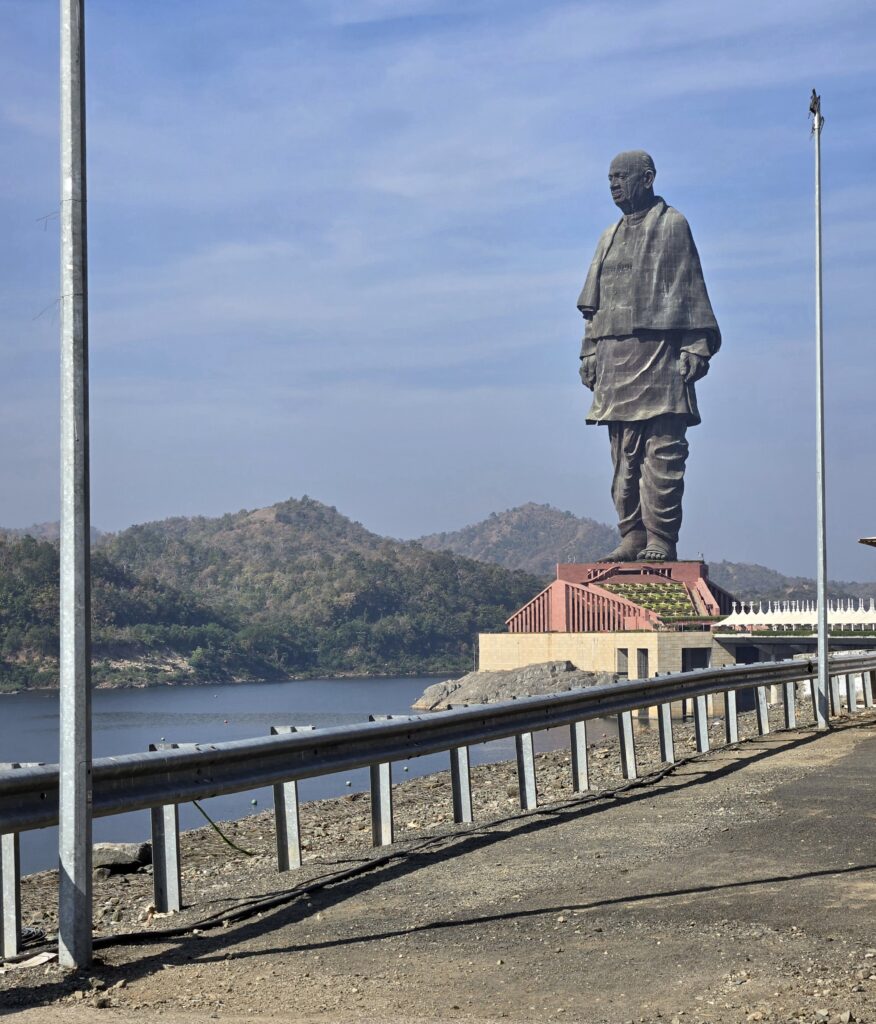
Some landmarks are impressive in photographs. Others make photographs feel almost useless.
The Statue of Unity belongs in the second category.
Our first glimpse came through the window of the shuttle bus carrying us from the parking lot to the monument. Ruby raised her Samsung Fold for a quick photo as the Statue of Unity rose above the landscape. Even from a distance, the monument seemed less like something placed in the scenery and more like something the entire road was leading toward.
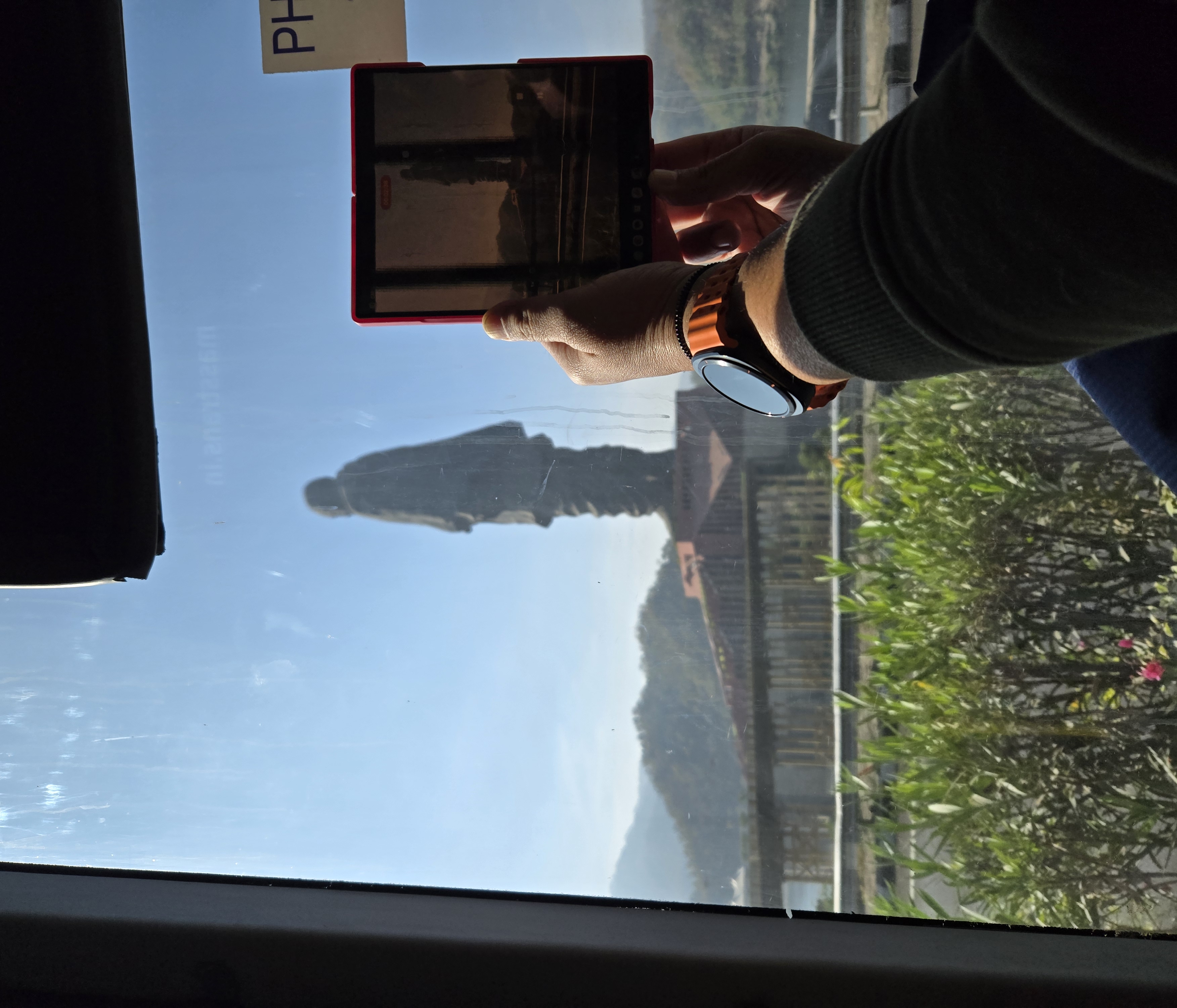
It just kept getting bigger
As we drew closer, the statue came fully into view across the water. The photographs tell the story almost frame by frame: first it is a distant shape, then a landmark, and then something so large that the landscape around it begins to look miniature.
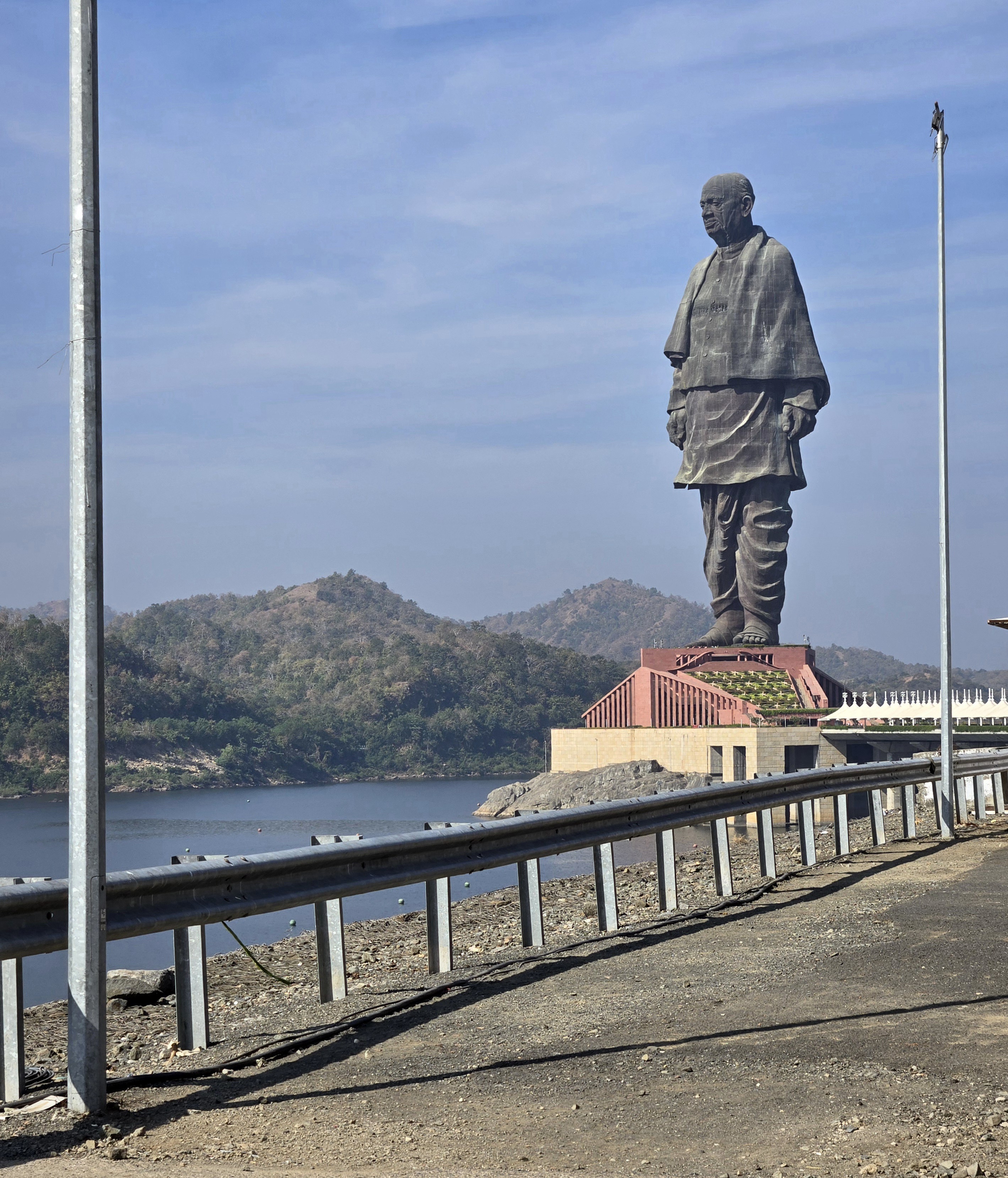
At 182 metres (597 feet) tall, the Statue of Unity was created in honour of Sardar Vallabhbhai Patel. A leader in India’s struggle for independence, he became the country’s first deputy prime minister and home minister in 1947.
Freedom arrived amid the grief and upheaval of Partition. More than 560 princely states then faced decisions about their future, and the India we know today was far from certain. Patel, working with V. P. Menon and others, helped bring those states into the Indian Union through diplomacy and, in some cases, force. The monument honours his part in holding a newly independent country together at one of its most fragile moments. You can read more about Patel’s role in India’s unification.
That history gives the word Unity its weight. Knowing the statue’s height did very little to prepare us for standing beneath it.
You look up. Then you look up some more. Then, naturally, you start backing away because surely that will help you fit the whole thing into the frame.
It does not. 😂
A family photograph beneath Sardar Patel
Of course, once we arrived, we did what families do at a place like this: we found a spot, gathered together and tried to make the monument fit behind us. Ruby and Kapi maasi were wearing funny-looking hats because my family has a silly travel tradition: whenever we go somewhere, we put on ridiculous hats and take pictures. The monument may have been the reason for the photograph, but those hats made it unmistakably ours.
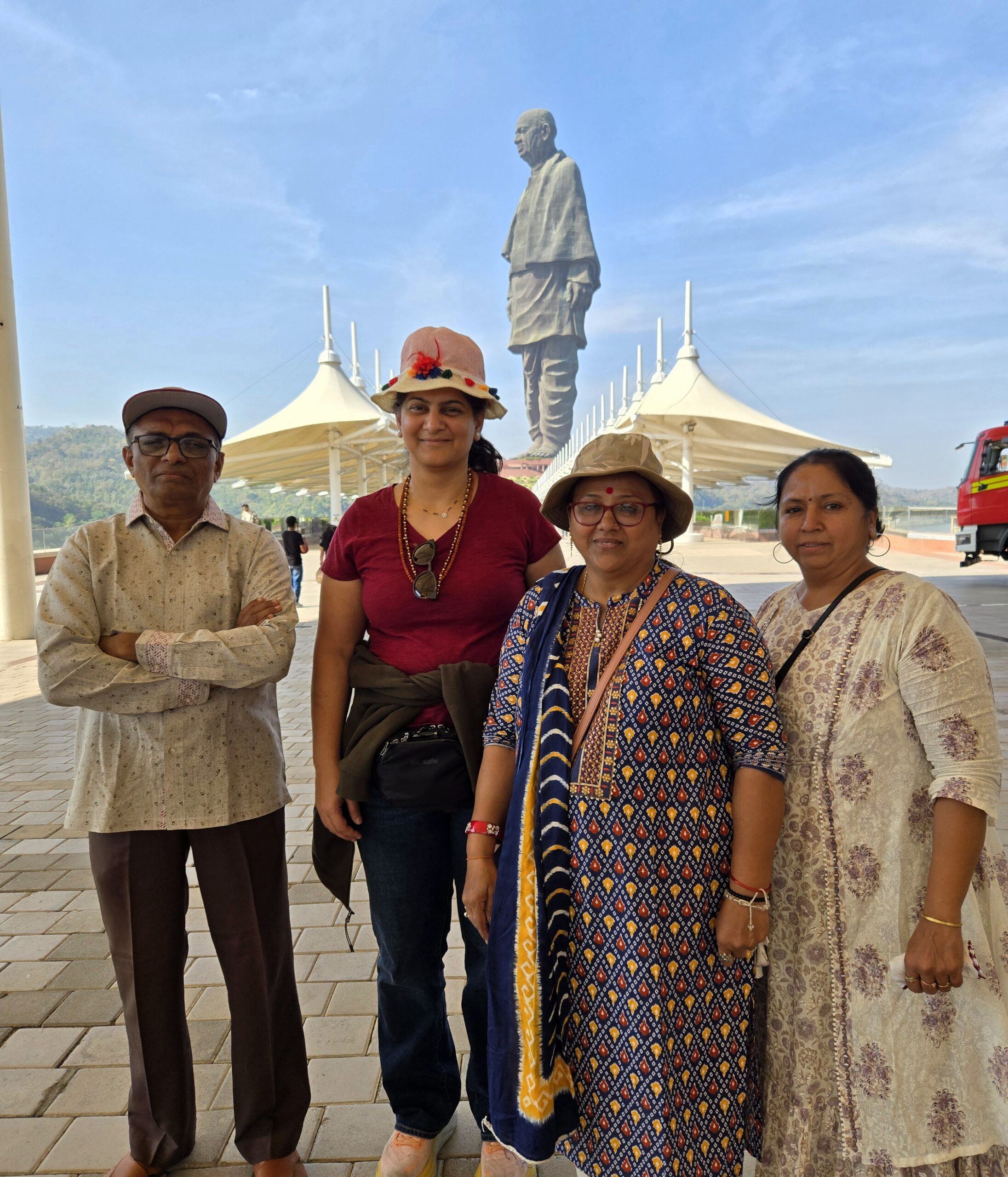
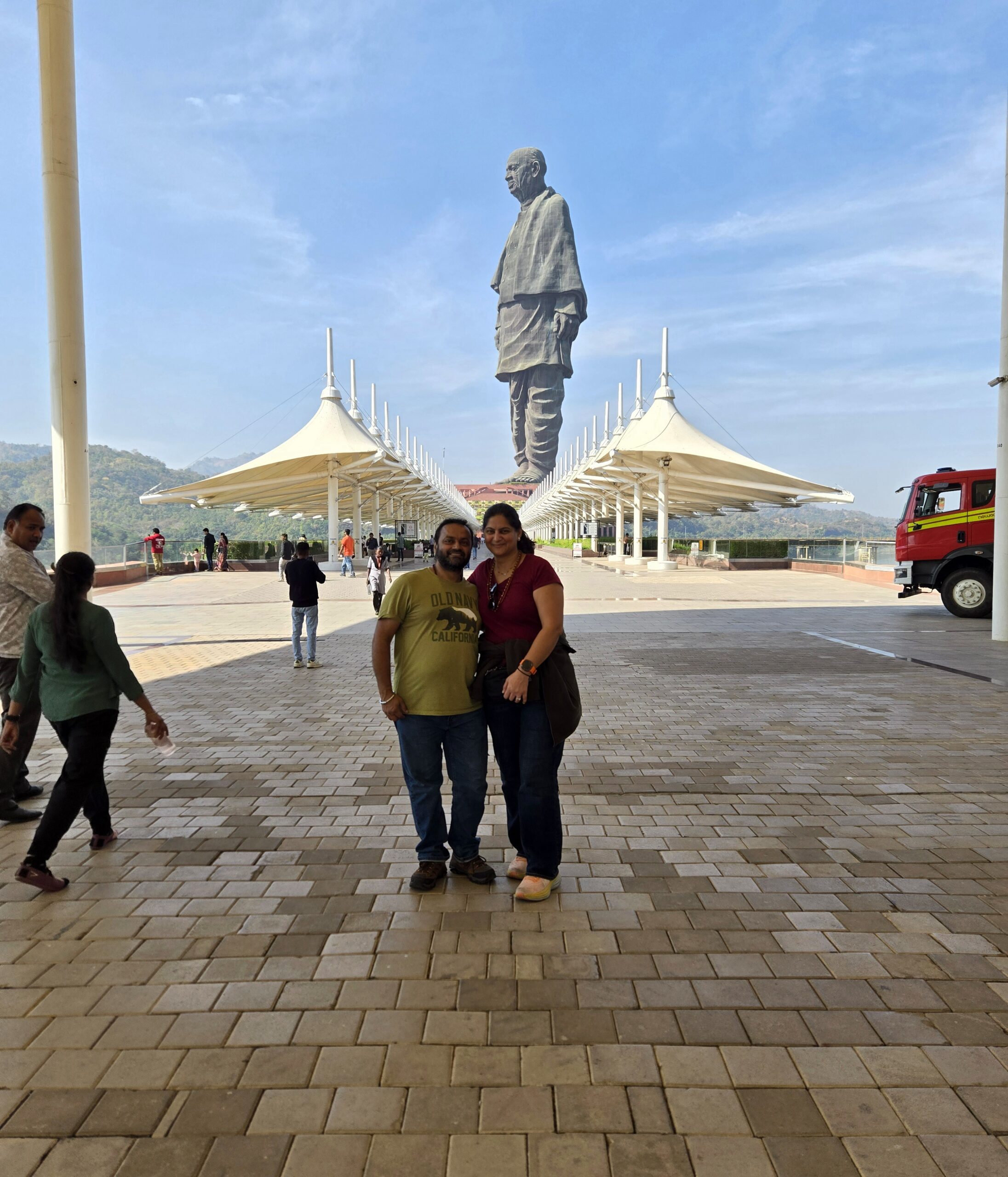
Behind us, Sardar Patel stood impossibly tall. In front of the camera, our own little group held still for a moment.
Meeting the person inside the monument
Outside, the Statue of Unity is defined by scale. Inside the museum, the focus begins to shift toward the man it represents and the difficult work of bringing a newly independent nation together.
One of the first exhibits that stopped us was an enormous sculpted head of Sardar Patel. Seeing his face at that scale made the transition from the exterior monument to the interior story feel almost seamless.
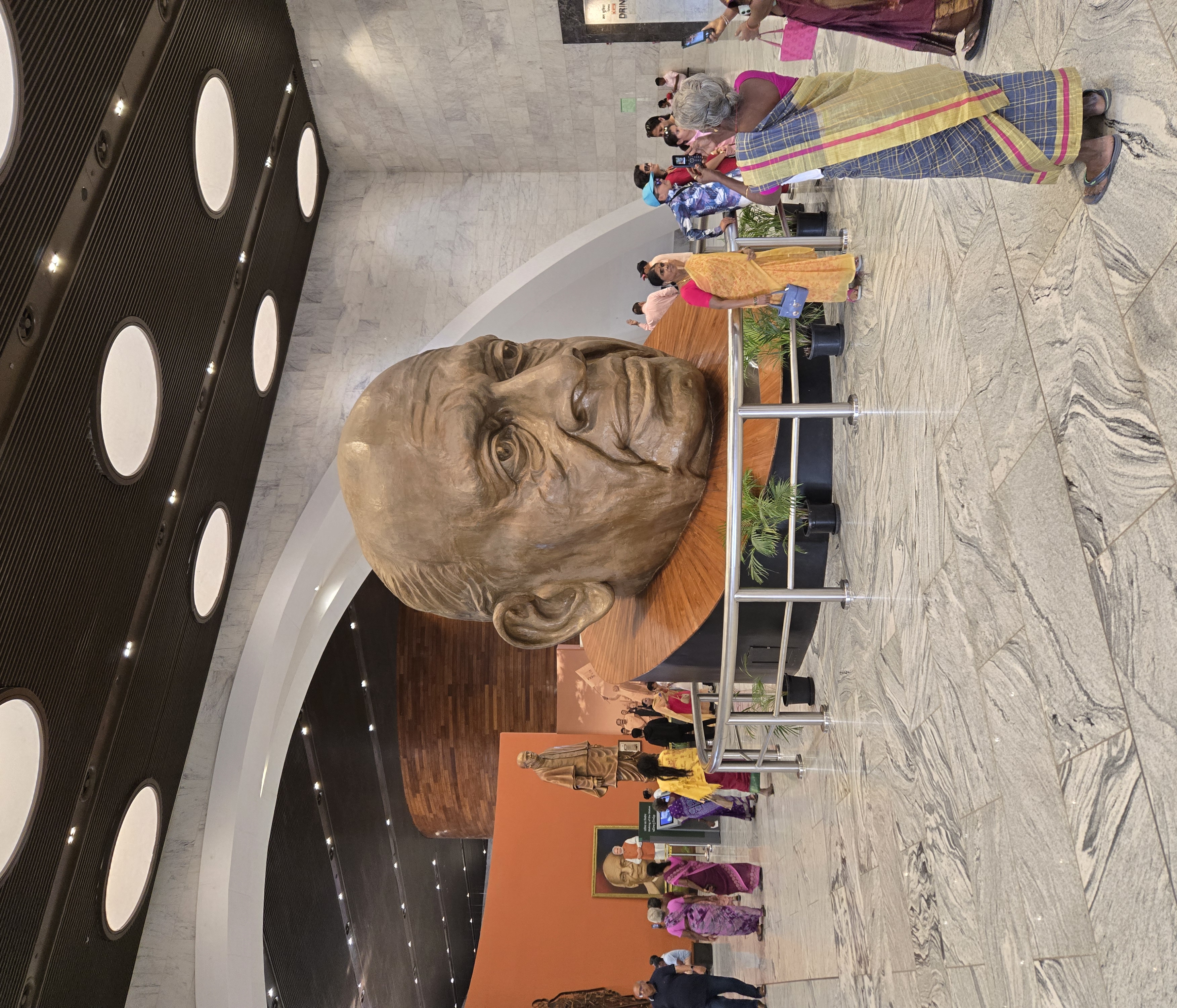
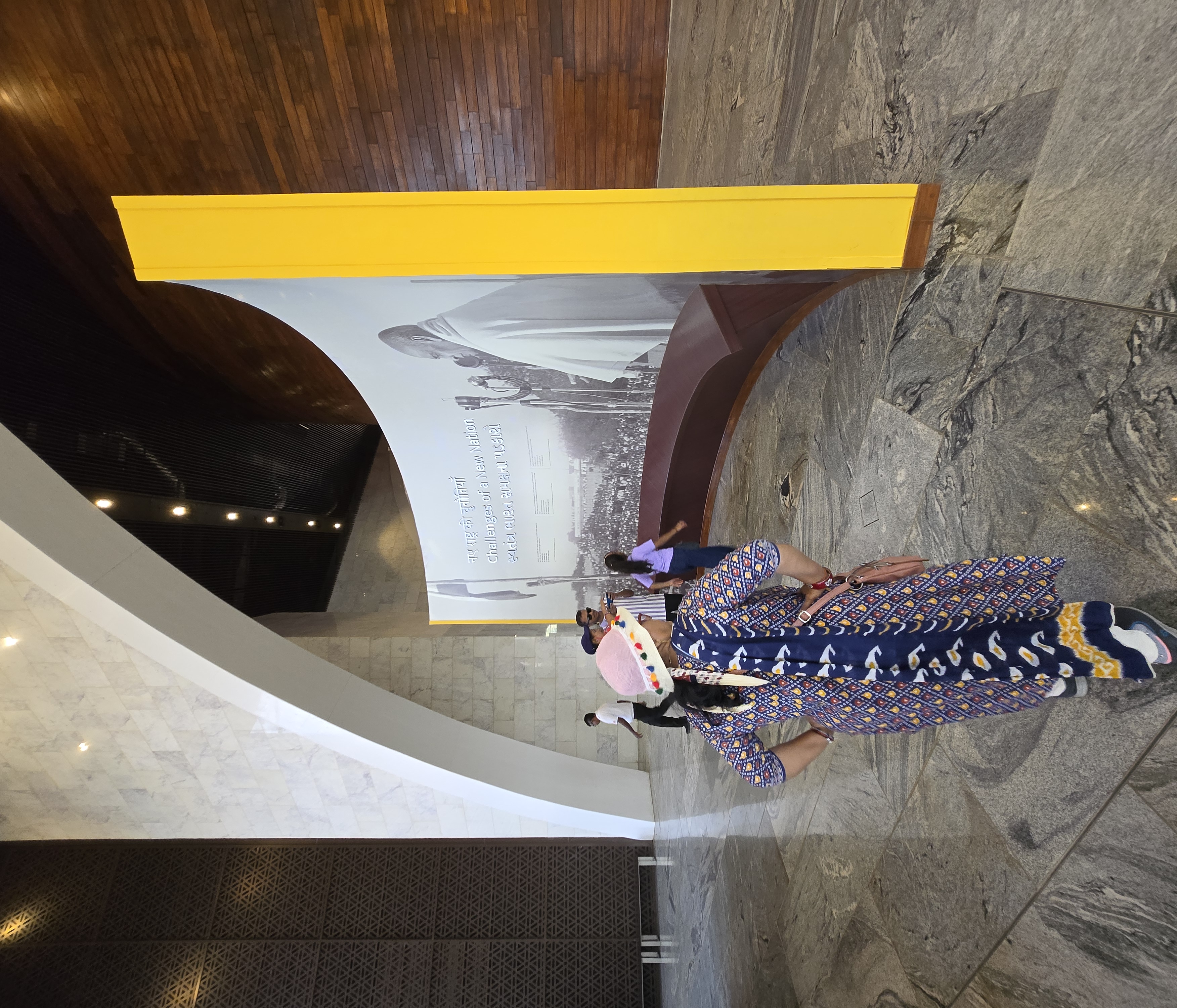
The galleries carried us from spectacle into history. A curved exhibit titled “Challenges of a New Nation” reminded us that unity here was not being presented as an abstract idea. It referred to real political decisions, negotiations and divisions that followed independence.
Ruby and I also learned that the monument’s materials tell a story of participation. During the Loha Campaign, farmers across India donated used agricultural tools. According to the project’s account, the collected iron was turned into reinforcing bars used in its construction, while soil gathered from around the country became a symbolic Wall of Unity. To me, those old tools being given a new purpose felt like another way of imagining India moving forward.
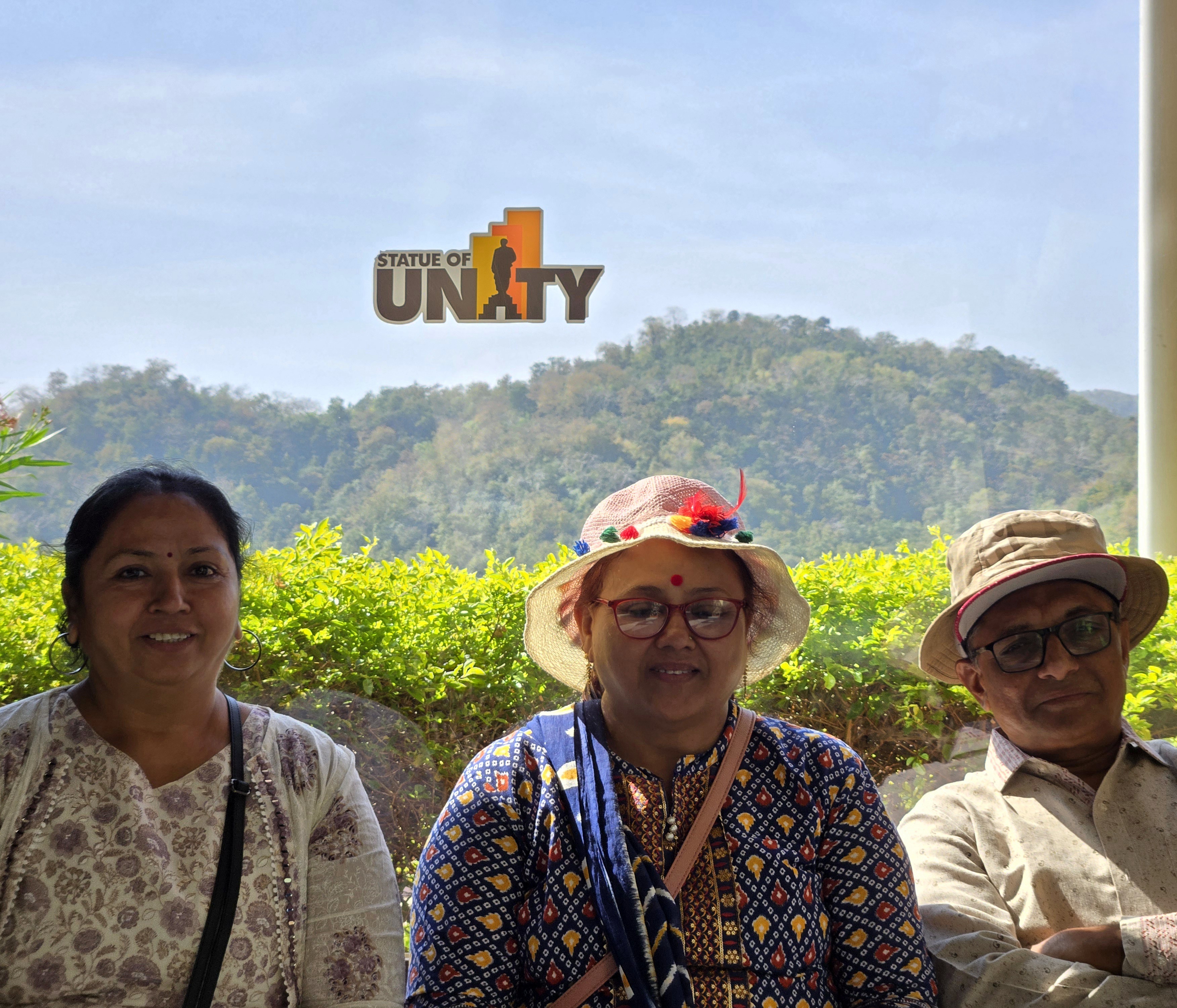
We also found a bright interior window marked with the Statue of Unity emblem—a much smaller frame within the enormous monument, and a natural place for another family photograph.
The view beyond the statue
The monument commands nearly every photograph, but the surrounding landscape deserves attention too. From the elevated viewing areas, the water, bridge and green hills stretched outward in layers. The scene finally gave our eyes somewhere to travel other than straight up.
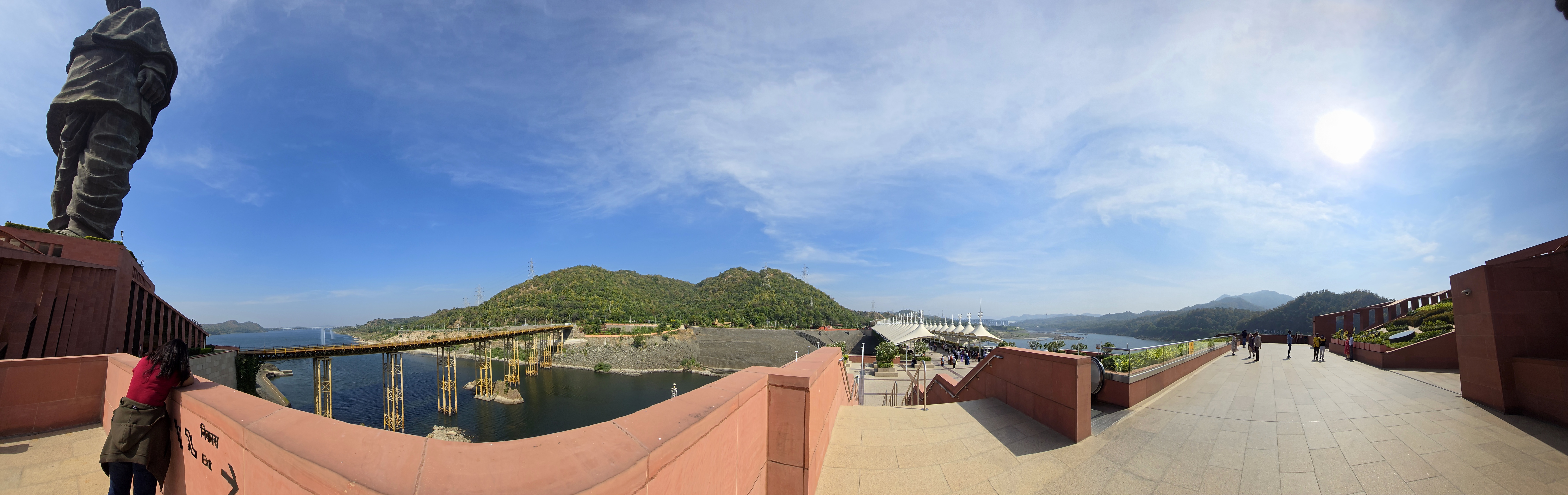
From another platform, the reservoir and distant ridgelines opened into a calmer view. After the movement of the crowds and the information inside the museum, it felt like the landscape was giving us a moment to breathe.
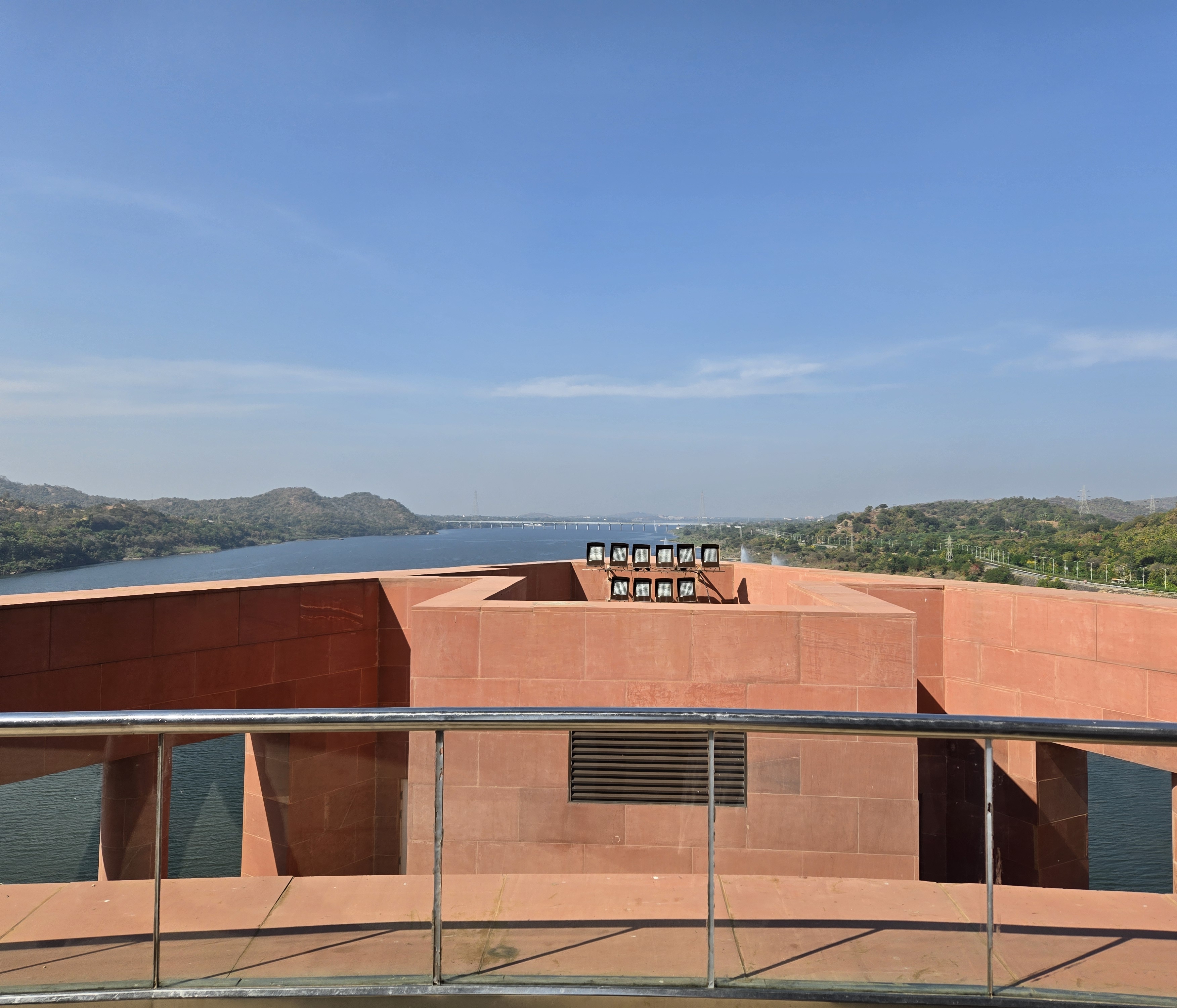
When scale becomes physical
The clearest explanation of the monument’s size came near the end, when we stood beside one of Sardar Patel’s feet.
In the photograph, the visitors look tiny against the folds of the clothing and the massive sandal. At that distance, the statue stops reading as a complete human figure. It becomes architecture: bronze surfaces, towering contours and a foot large enough to make a crowd disappear beside it.
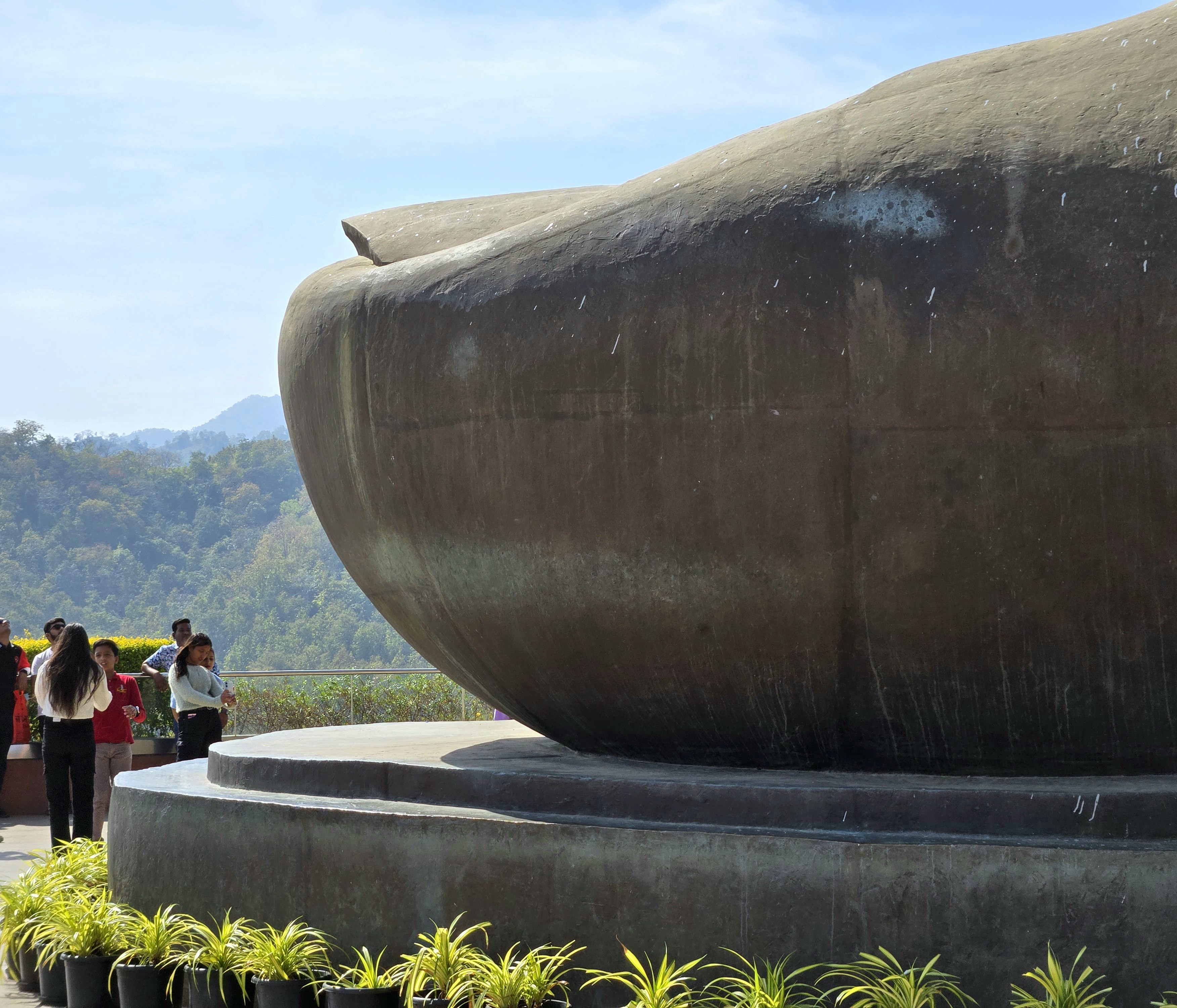
That image comes closest to showing what our cameras struggled to communicate all day. The monument is not simply tall. It changes your sense of proportion.
A different side of Gujarat
What made this stop especially memorable was how different it felt from the other places we visited in Gujarat.
At Kadia Dungar, we climbed into caves, sat in silence and listened to family stories rooted in the mountain. Here, we moved through a modern national monument built around visibility, history and immense scale.
One place invited us inward. The other kept making us look up.
Looking through the photographs now, even the strongest image still flattens the experience. You can see the statue. You can see our family standing in front of it. But the camera cannot quite reproduce the moment when the full size of it finally registers.
Maybe that is why we kept taking more pictures.
Not because one was not enough, but because none of them felt big enough.
This story is part of our India 2024 journey.