Some evenings reveal themselves slowly.
By late afternoon, the harshness had begun to leave the Gujarat sun. What followed was not one grand destination, but two very different encounters with Shiva Bhagwan: first through color, flowers and the familiar movement of an active temple, and later through darkness, carved stone and a silence that seemed to gather around us.
Looking back, the two temples feel connected less by geography than by contrast. One greeted us in warm evening light. The other waited until night.
Shree Siddhnath Mahadev Mandir
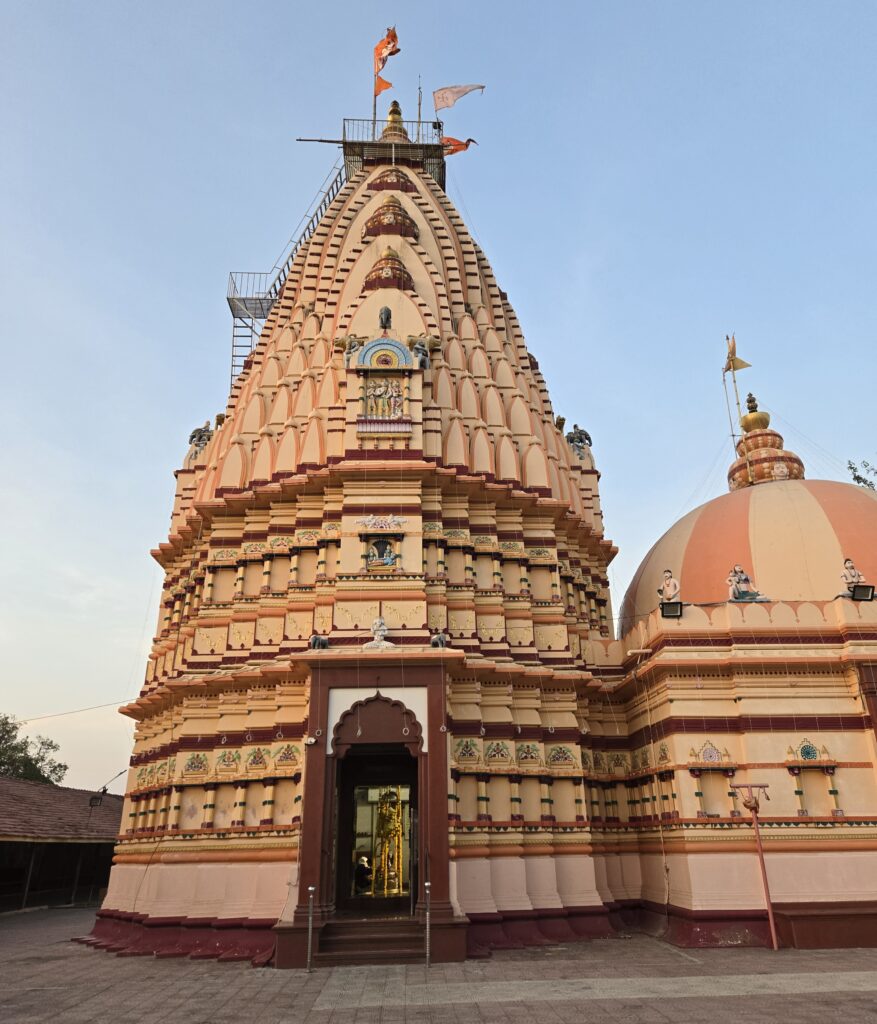
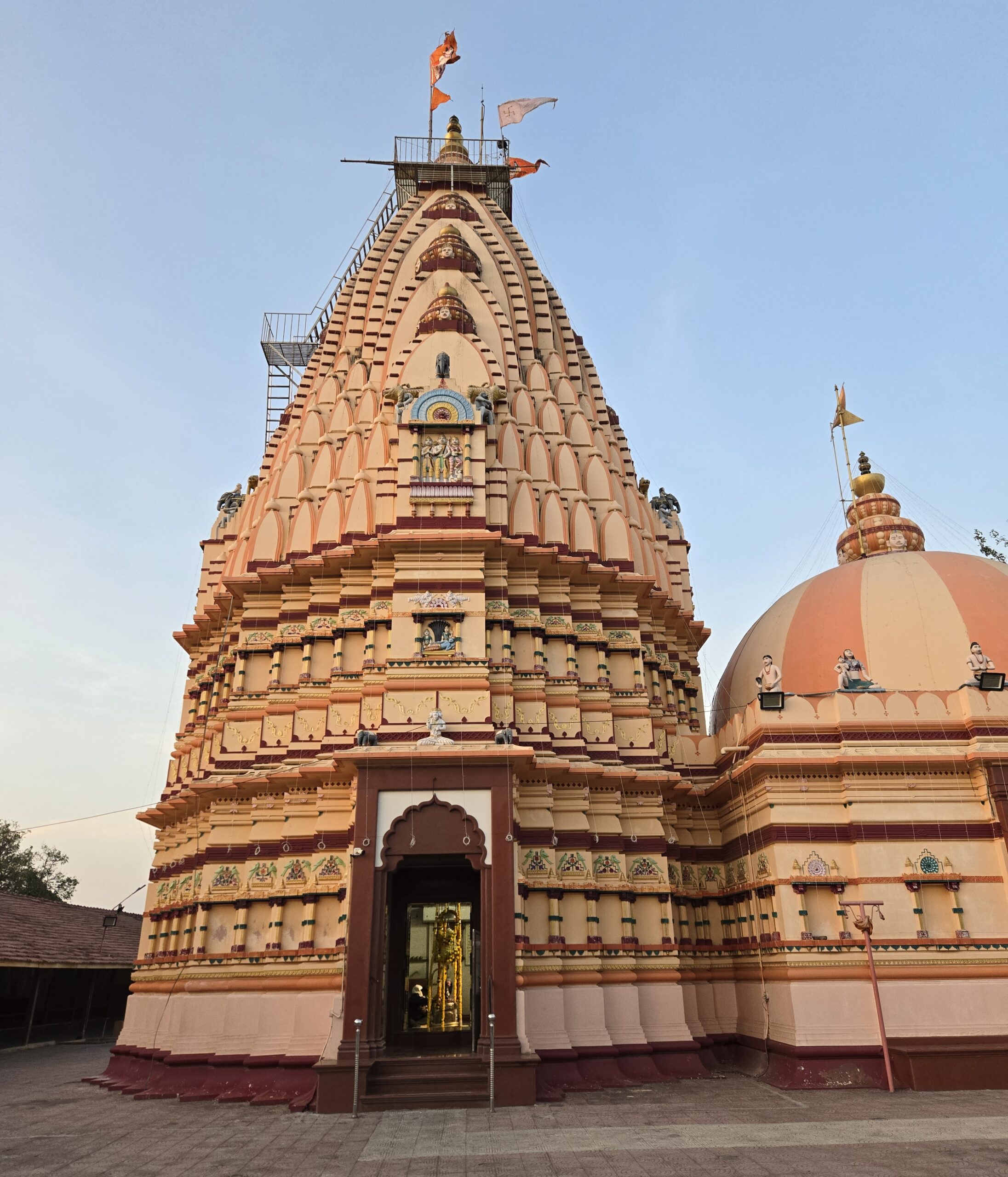
The shikhara of Shree Siddhnath Mahadev Mandir rose above the courtyard in bands of peach, terracotta and cream. Small sculpted figures and painted details appeared at every level, while saffron flags moved against a clear blue sky.
From outside, the temple was bright and open. The entrance drew our eyes directly toward the center, where the glow of flowers and lamps was already visible inside.
The story Kapi maasi shared with us
As we stood within Gujarat’s coastal landscape, Kapi maasi—my mother’s sister—shared the Puranic story of Samudra Manthan. She told us of a local belief connecting the nearby sea with the great churning. In the sacred account, the devas and asuras churned the cosmic Ocean of Milk in search of amrita, using Mount Mandara as the churning rod and Vasuki as the rope.
Before the nectar appeared, a deadly poison rose from the churning and threatened all of creation. Shiva Bhagwan took the poison into himself and held it in his throat, becoming Neelkanth—the blue-throated one. Laxmi Mata was among the sacred treasures to emerge, followed eventually by Dhanvantari Bhagwan carrying the amrita.
Kapi maasi’s telling made the surrounding waters feel connected to the larger Puranic world of Shiva Bhagwan. The temple’s own tradition is tied more specifically to the sacred landscape of the Tapi: its history cites the Tapi Mahatmya of the Skanda Purana and tells of Siddhnath Mahadev manifesting through the devotion and tapasya of Gokarna Muni.
Flowers, bells and a living place of worship
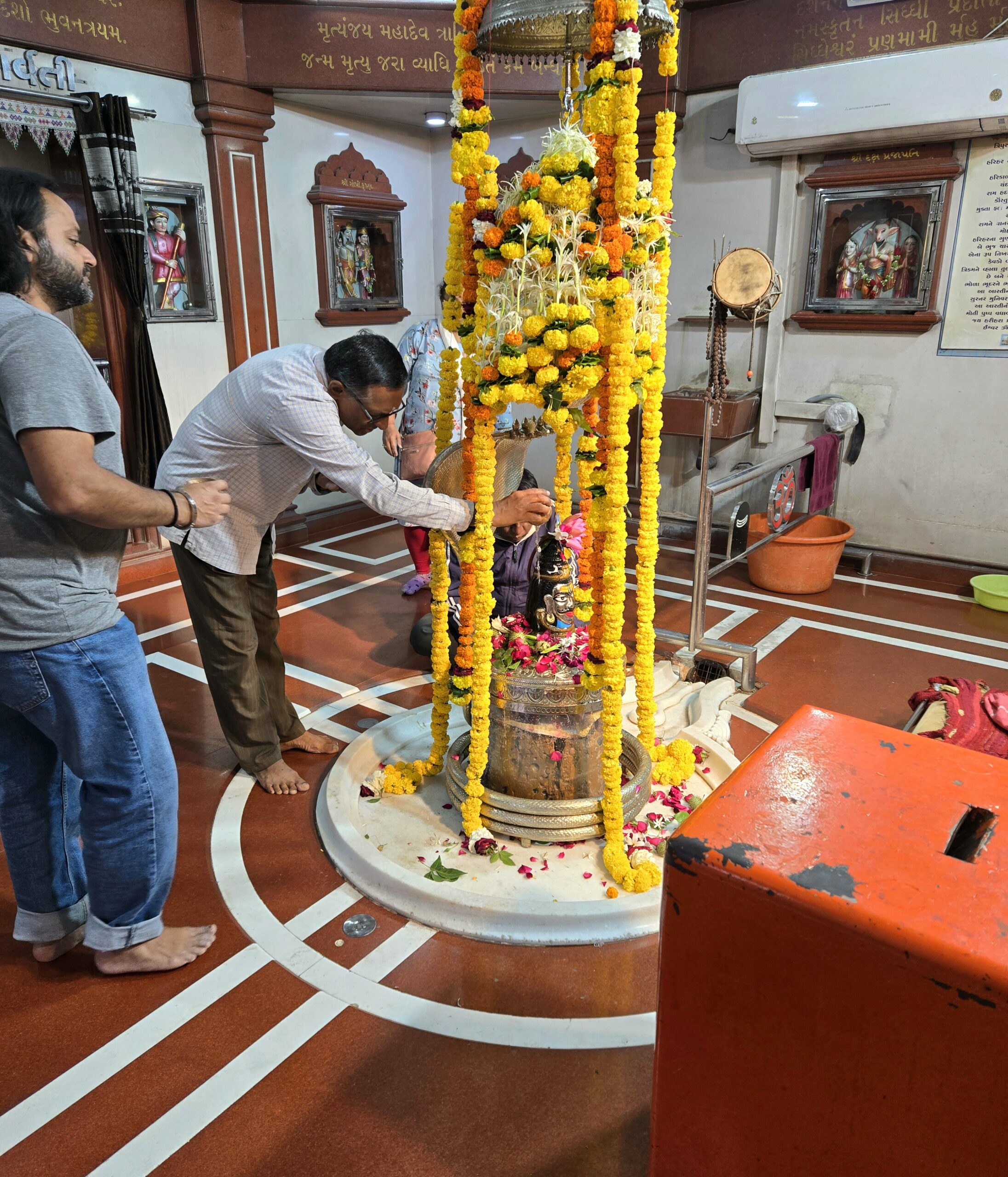
Inside, the visual rhythm changed immediately. Marigold garlands descended around the Shiva linga in long strands of yellow and orange. Rose petals, leaves and offerings covered the base, while devotees moved close enough to pray and make their offerings by hand.
This was not a sacred space preserved behind glass. It was active and lived in. People approached, paused, reached forward and made room for whoever came next. The sound and movement were gentle, but constant.
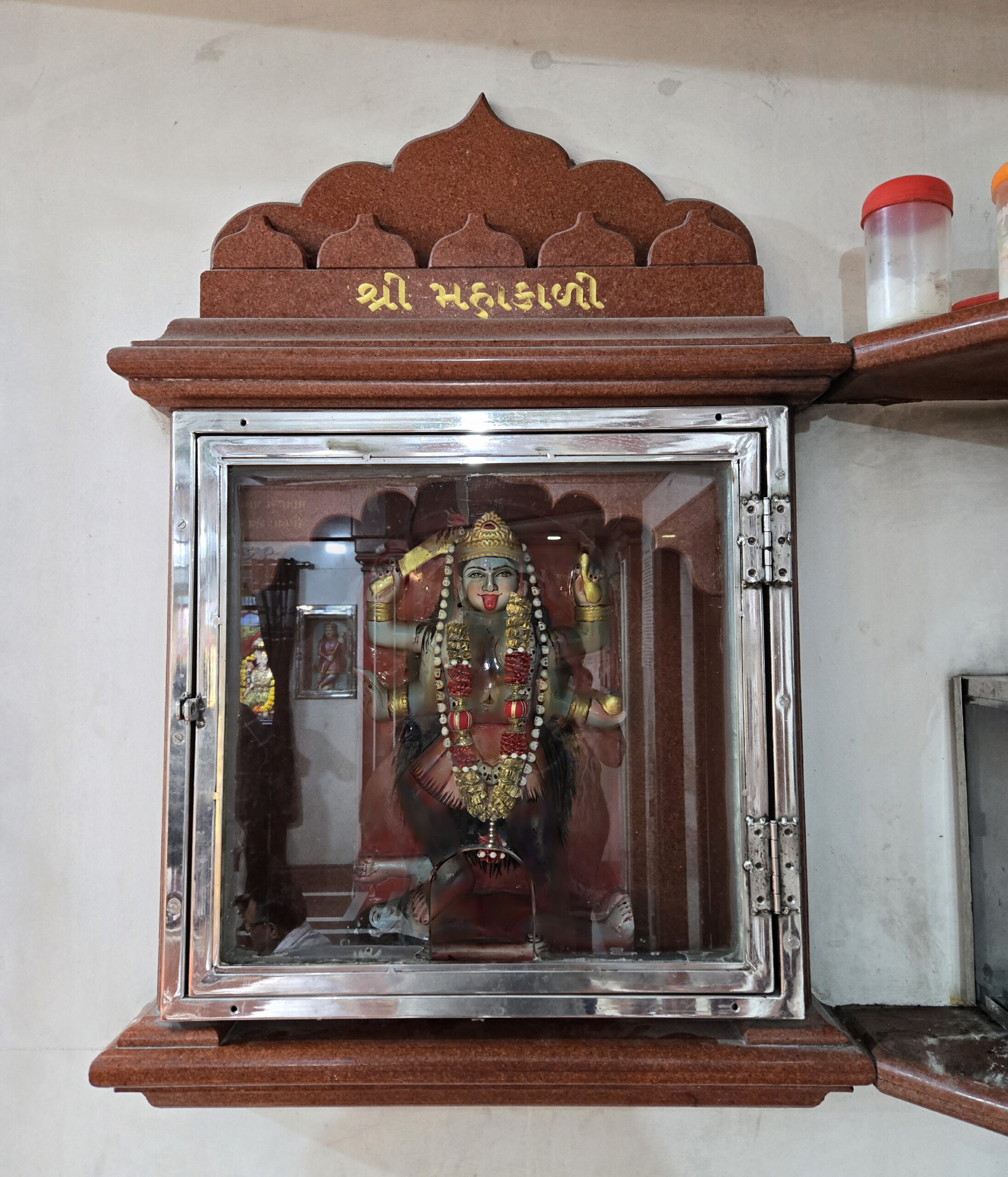
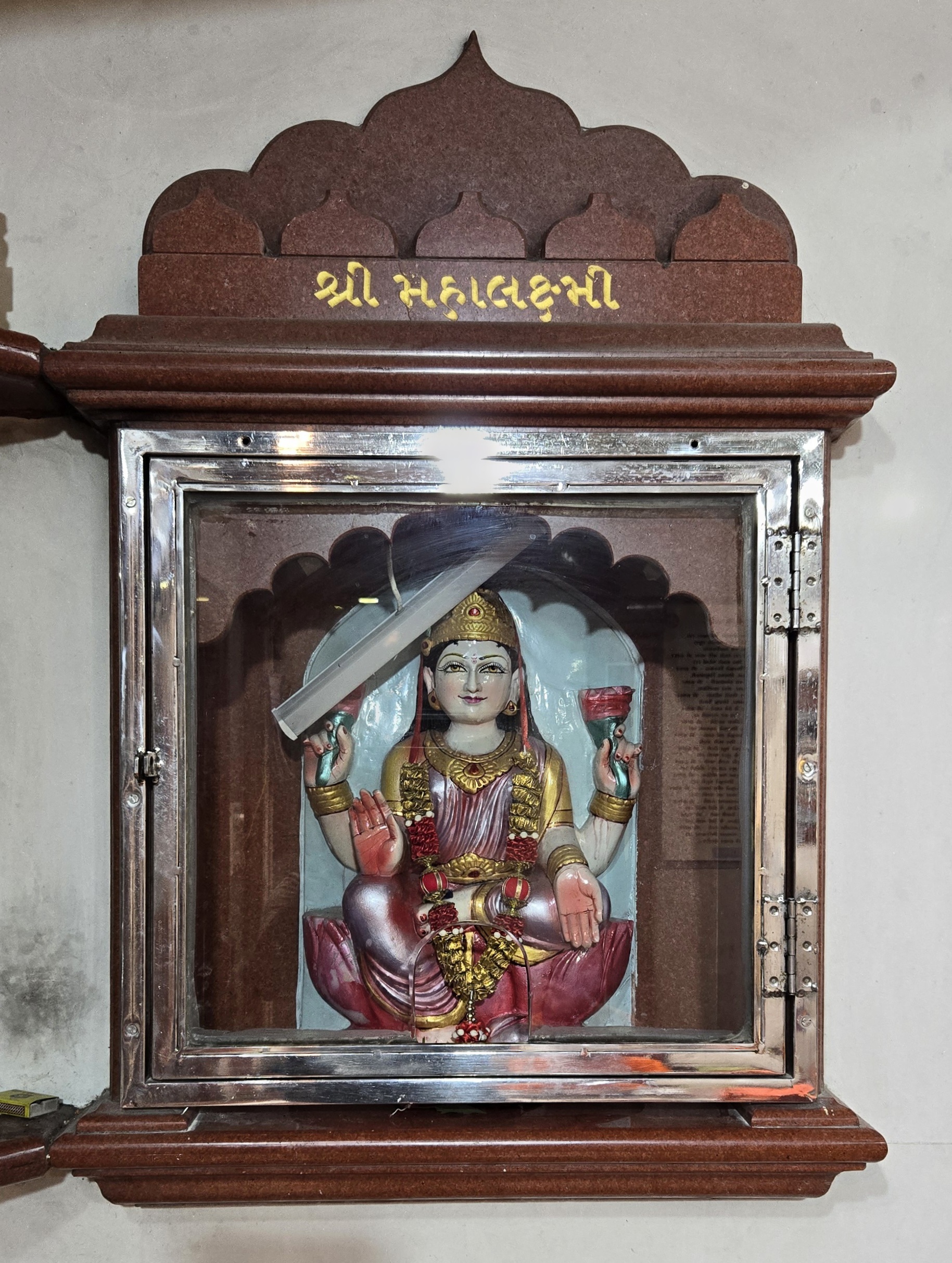
Along the surrounding walls, smaller shrines honored Kaali Mata and Laxmi Mata. Each sacred image sat within its own polished wooden frame, adding another distinct presence to the temple interior.
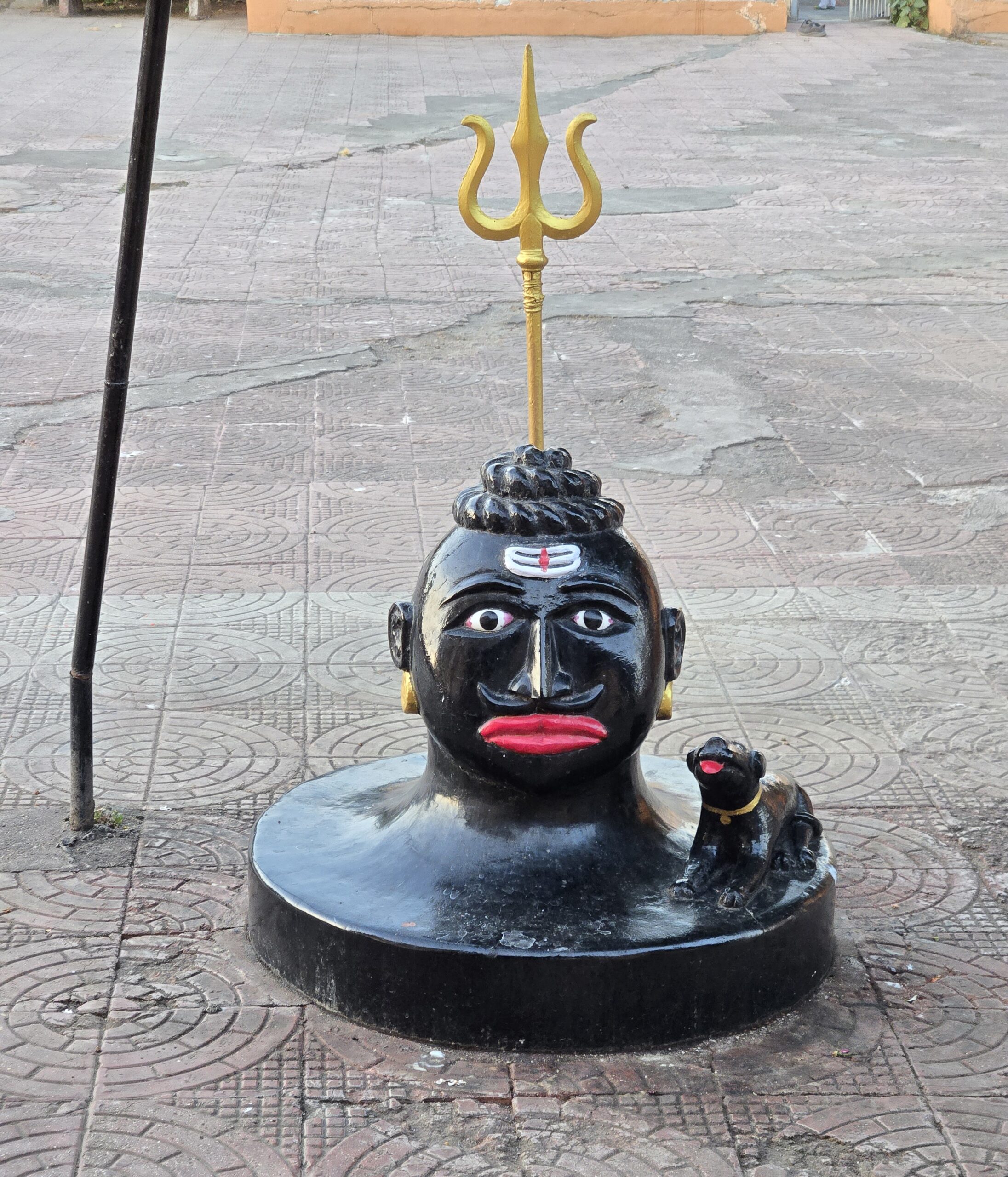
Outside, an image of Kaal Bhairav—another form of Shiva Bhagwan—stood beneath a golden trishul with his dog companion beside him. Its bold, almost folk-art appearance felt completely different from the ornate temple façade behind it. That contrast was part of the charm of the place: elaborate architecture, intimate shrines and familiar devotional symbols all shared the same courtyard.
From sunset into darkness
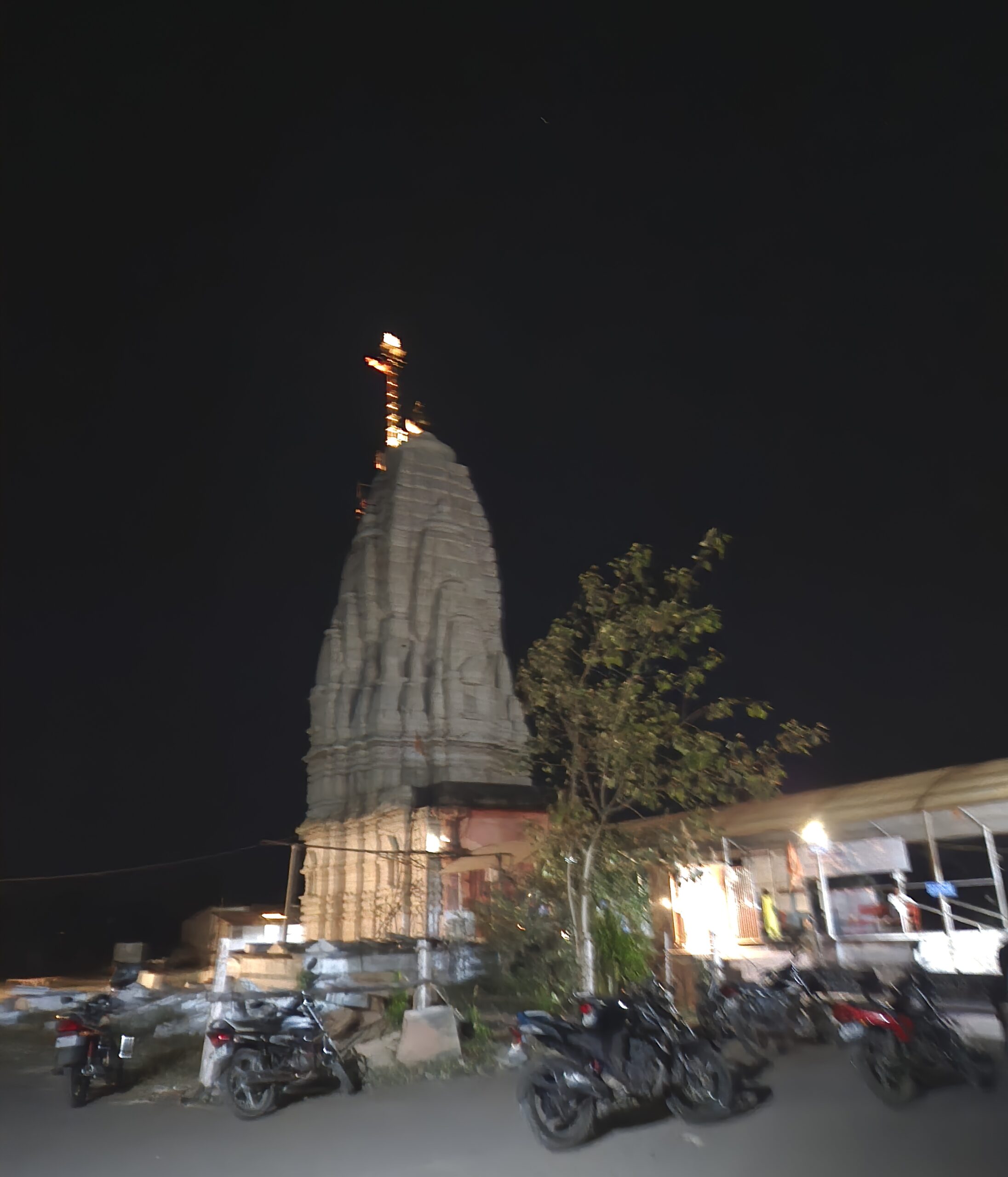
By the time we reached the second Shiva temple, daylight had disappeared.
The pale stone shikhara rose into a nearly black sky. A few electric lights illuminated the entrance and the small area around it, but most of the temple remained in shadow. If Siddhnath Mahadev had announced itself through color, this place seemed to hold everything inward.
A sanctuary shaped by stone
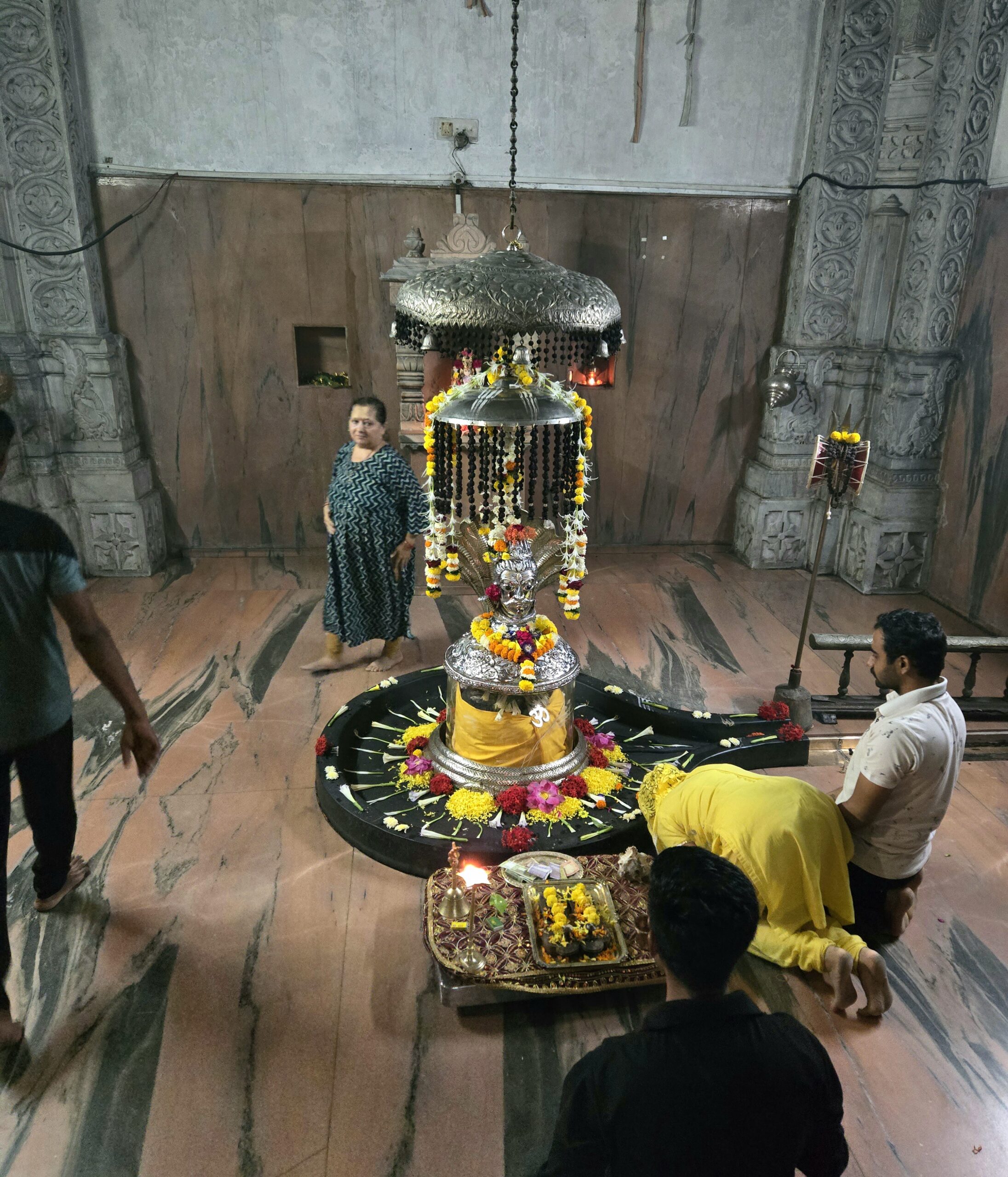
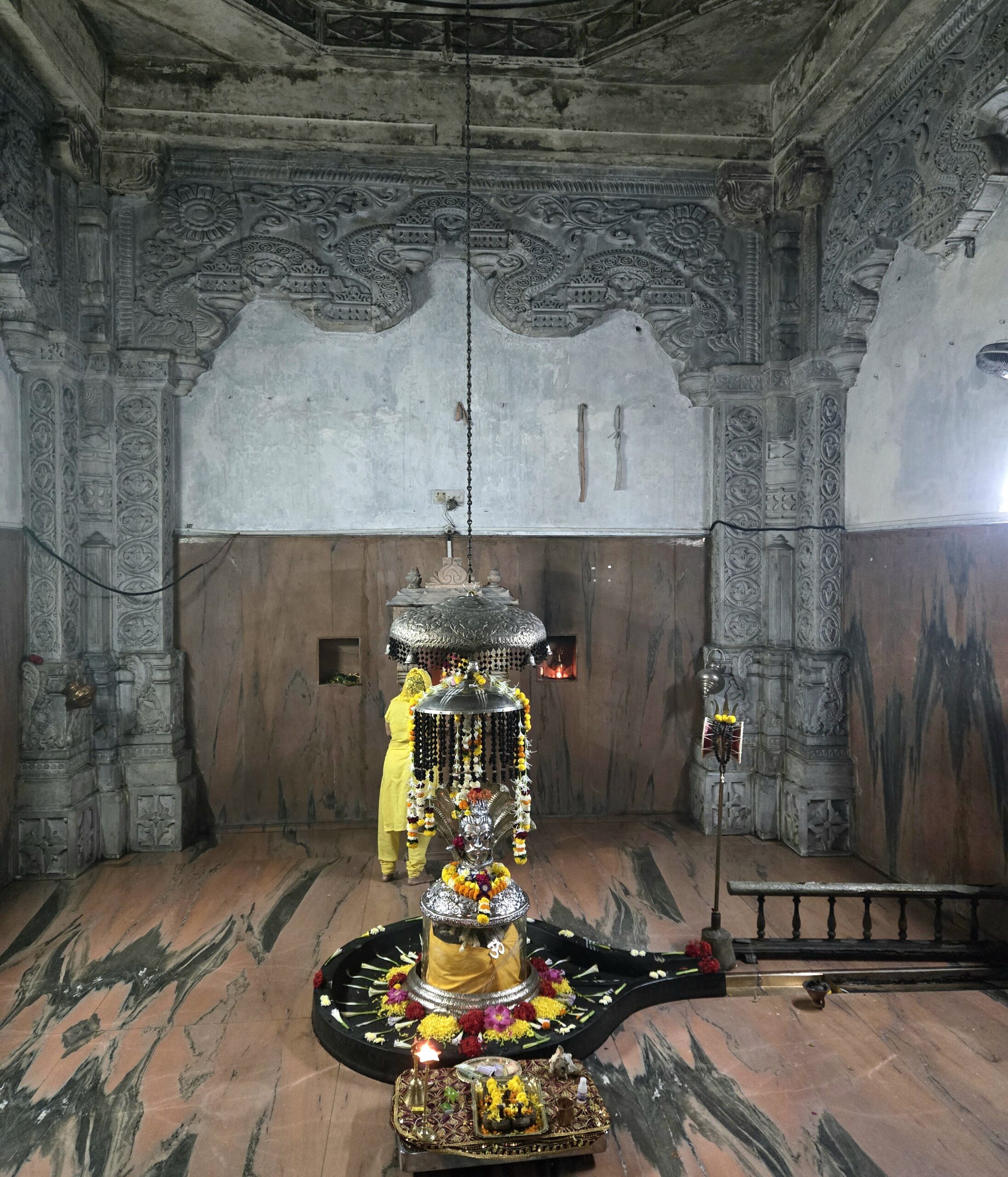
Inside, our attention went first to the Shiva linga beneath an ornate silver canopy. Fresh flowers circled the dark base. A cobra form rose protectively around the linga, while oil lamps and offerings brought small pockets of warmth into the gray stone room.
The space felt older than the polished surfaces and electrical lights around it. Carved pillars framed the sanctum, and decorative forms moved across the stone above us. The architecture seemed to absorb sound. Even with other devotees present, the room carried a sense of stillness.
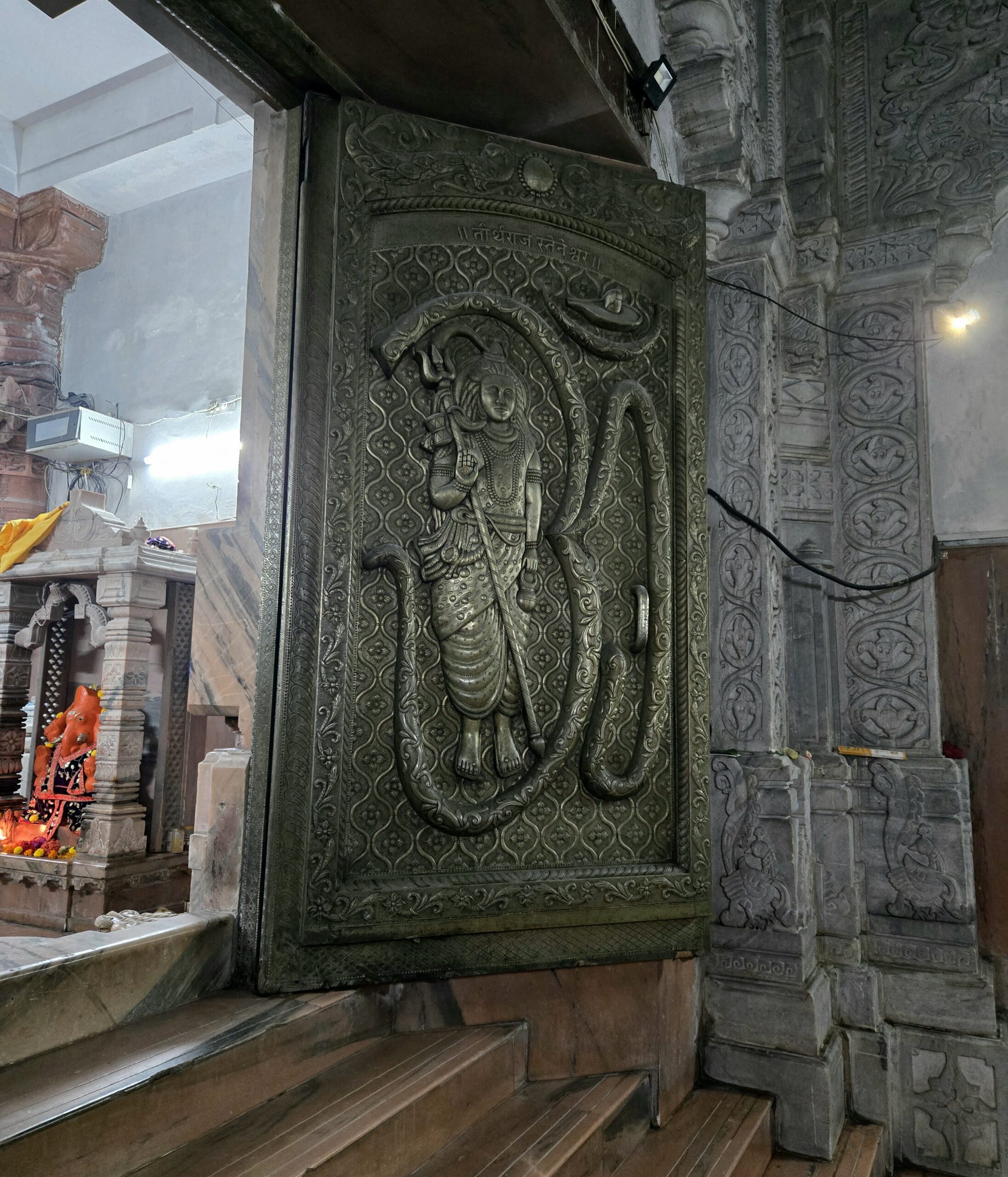
One of the details that stayed with us was a large carved door panel depicting Shiva Bhagwan. The figure stood in relief against a dense field of patterns, with the trishul rising beside him. It was the kind of craftsmanship that rewarded a slower look. The closer we moved, the more the surrounding stone seemed to reveal.
Two temples, two different kinds of stillness
These visits happened only a short time apart, yet they remain separate in my memory.
At Siddhnath Mahadev, devotion appeared through color and activity: marigolds, framed shrines, offerings and people moving around the central Shiva linga. At the second temple, the experience became darker and quieter: silver against black stone, flowers against gray pillars and the night waiting beyond the entrance.
Neither place needed spectacle. What made the evening memorable was being able to move from one expression of faith into another and feel how differently a sacred space can shape our attention.
That contrast would continue throughout our time in Gujarat. The following days would take us from ancient caves and family memories at Kadia Dungar to the immense modern scale of the Statue of Unity.
More from Gujarat 2024
From temple courtyards to mountain caves.
Our next journey led into the monkeys, meditation rooms and ancient rock-cut spaces of Kadia Dungar.