Some places begin with a signboard or a ticket counter.
Kadia Dungar began with monkeys.
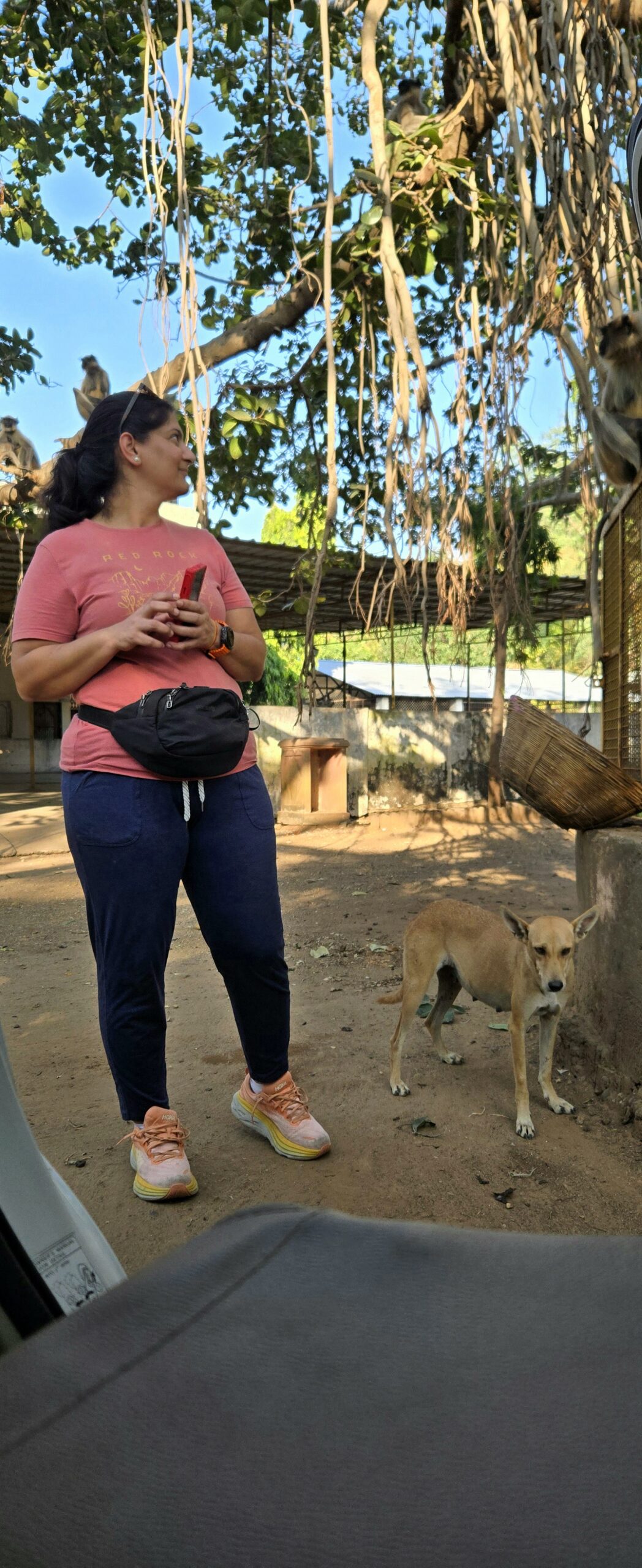
When Ruby and I entered the ashram grounds during our 2024 Gujarat trip, we were greeted by a troop of Old World monkeys moving through the trees and gathering around the path. For a moment, it felt less like we had arrived at a tourist destination and more like we had accidentally wandered into a scene from the Ramayan.
Kishore maasaa was completely at ease. “Maasaa” is the Gujarati word I use for my mother’s sister’s husband, and he had been visiting this ashram since he was a little boy. He knew exactly what the monkeys were waiting for.
The unofficial minister of Parle-G
Before the climb could begin, Kishore maasaa produced packet after packet of Parle-G biscuits from his cotton Gandhi-style messenger bag. The younger and more excitable monkeys came rushing toward him immediately. Without some kind of order, they would have climbed over him and completely engulfed him for the biscuits.
That was why he carried a long stick. He was not striking the monkeys with it. He tapped it against the ground to create a little space and maintain order while he distributed the biscuits.
Then we noticed one monkey sitting far away from all the commotion.
He appeared to be the leader of the troop. While the others crowded around Kishore maasaa, he remained in the distance, completely calm. But when he finally stood and began walking toward us, something remarkable happened: the other monkeys parted like the Red Sea.
He approached Kishore maasaa without any rush, calmly accepted a handful of biscuits and then stepped back while keeping his eyes on him. Watching their exchange, I found myself wondering whether the monkey recognized maasaa from his previous visits. I cannot know that for certain, but their calm familiarity made it feel possible.
Once the last Parle-G packet was empty, we turned toward a dirt path covered by a high canopy of arching jungle trees. The monkeys and the bustle of the ashram slowly fell behind us as we walked toward the staircase leading up Kadia Dungar.
A staircase into the mountain
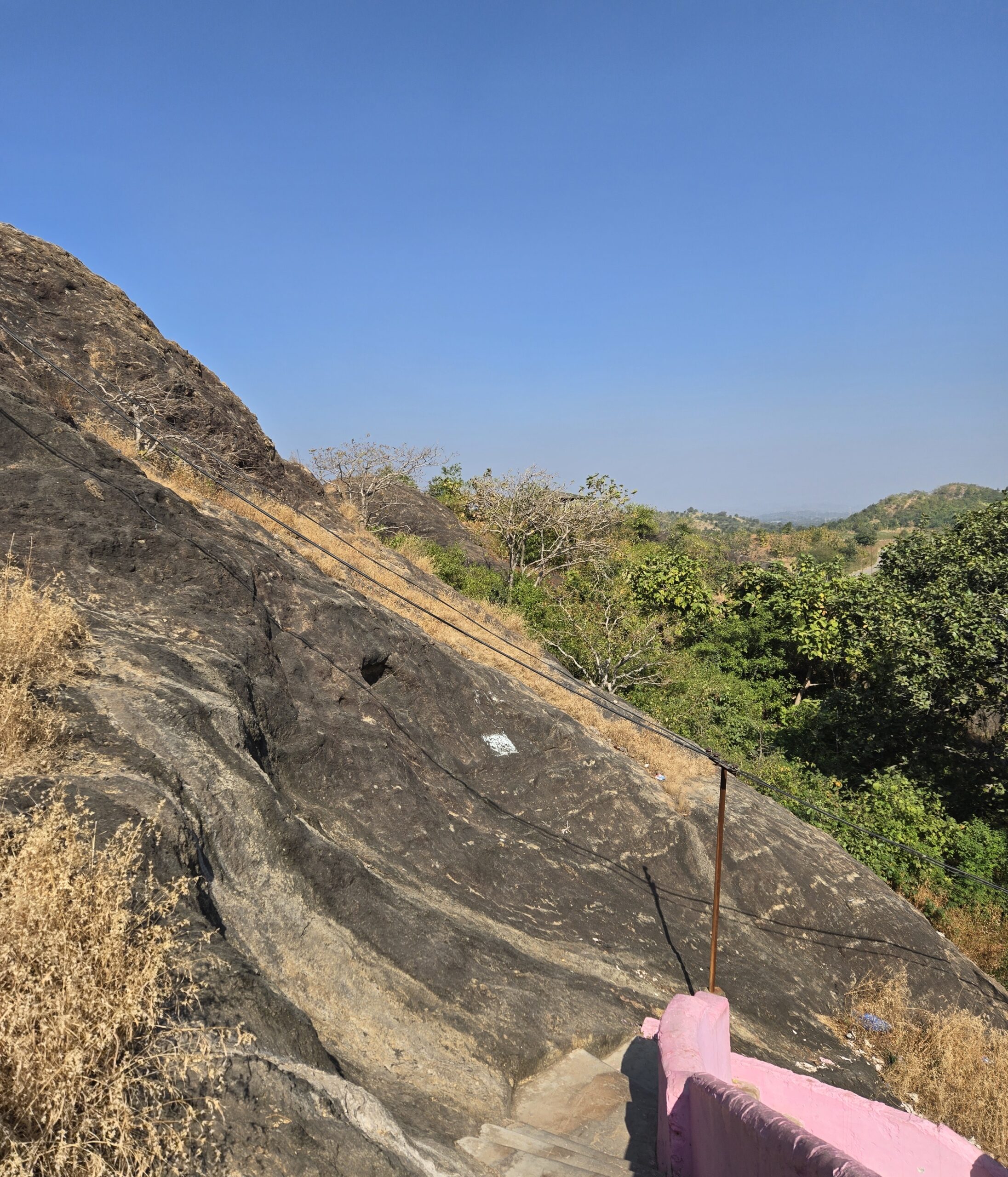
The first part of the climb followed man-made stairs. They carried us upward through the greenery until we reached a temple built not beside the mountain, but inside it.
Stepping inside changed everything. The bright afternoon disappeared behind us, replaced by a dark, confined cave with a low ceiling and very little light. The aroma of incense gathered in the still air. Shrines dedicated to Parvati Mata, Ganesh Bhagwan and other Hindu deities emerged softly from the darkness, while a separate chamber held a large Shiva linga.
Almost immediately, I felt a sudden charge of energy inside that space. Whether it came from the darkness, the incense, the generations of prayer or something less easily explained, I cannot say. I only knew that the atmosphere felt different.
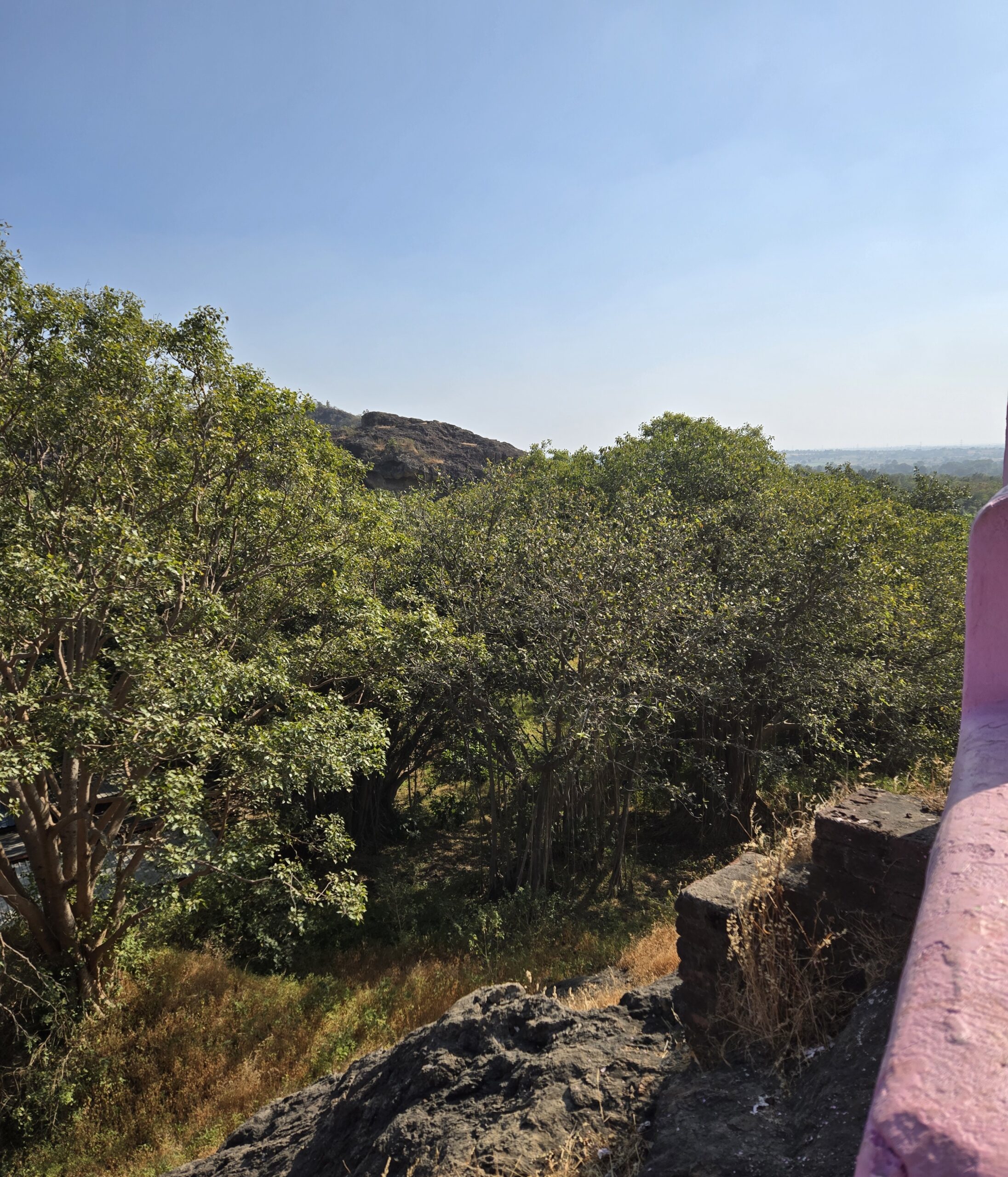
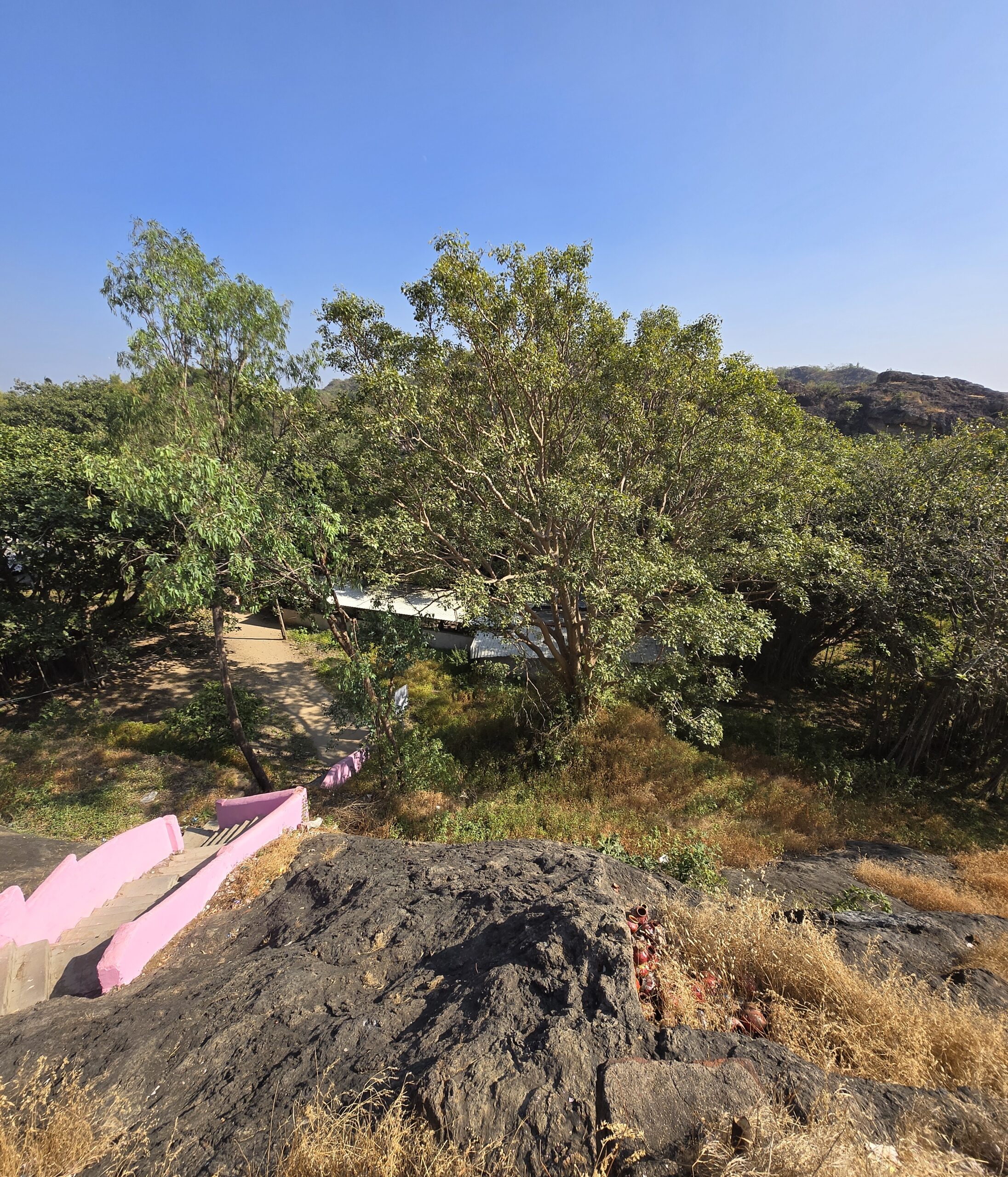
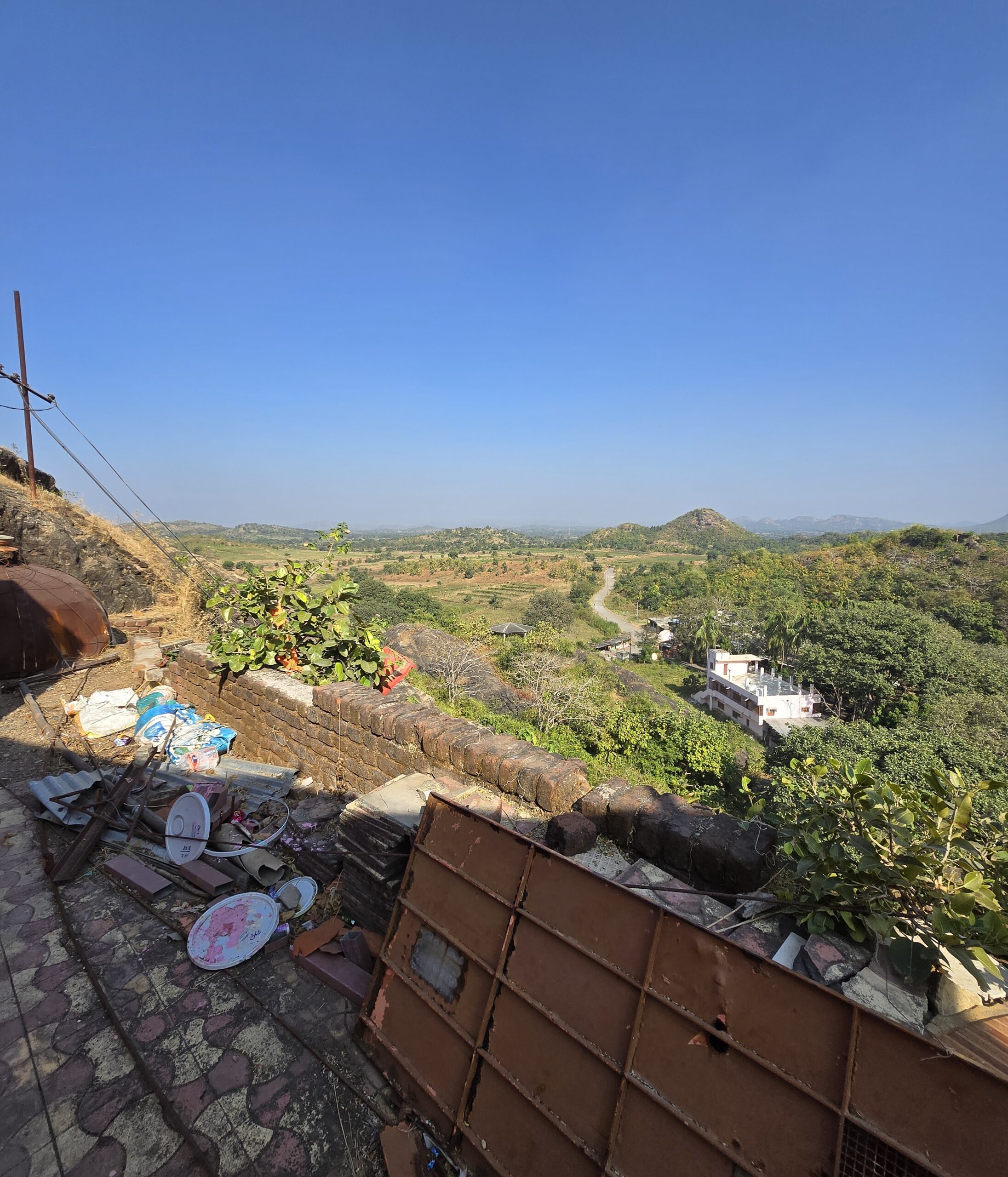
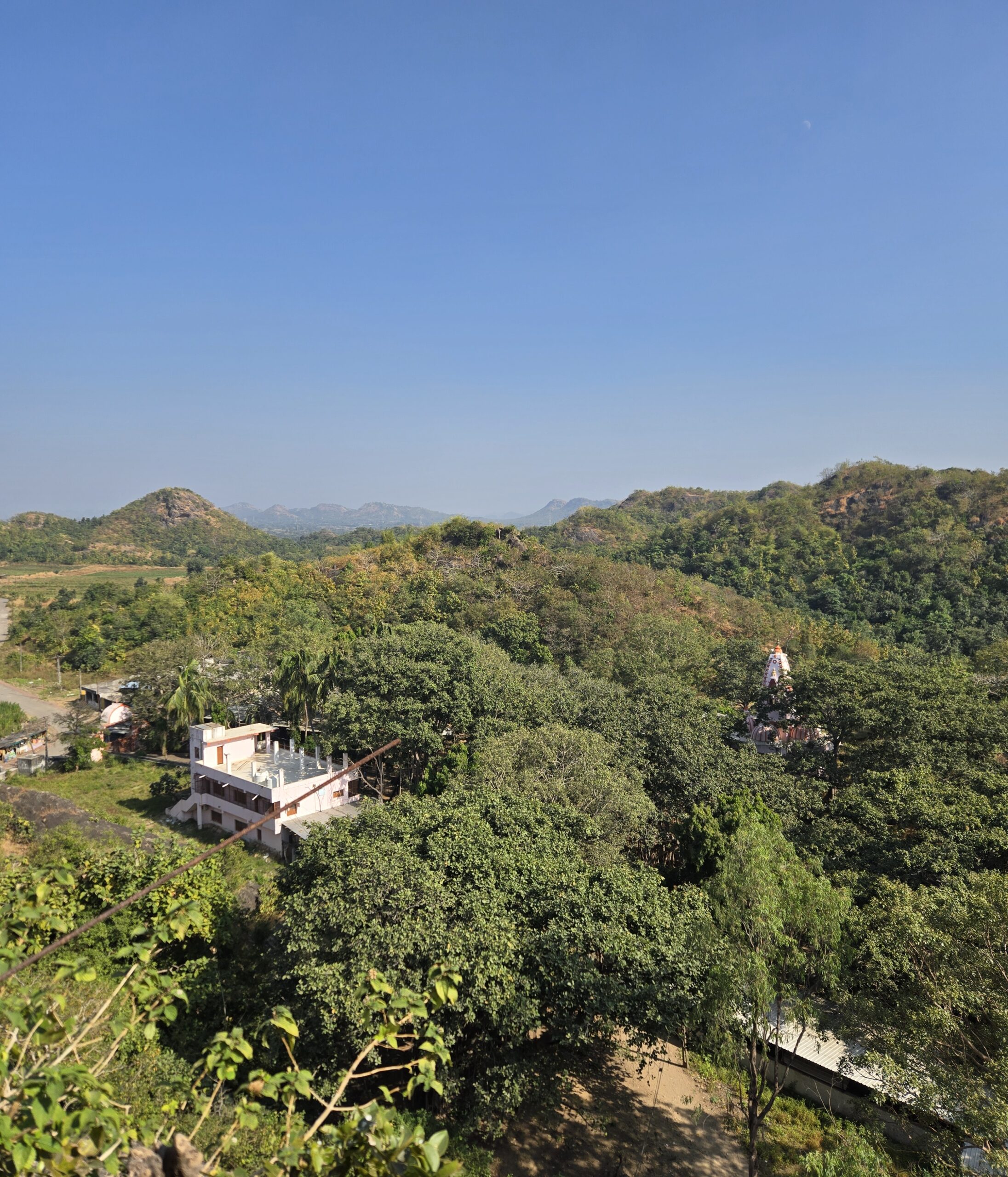
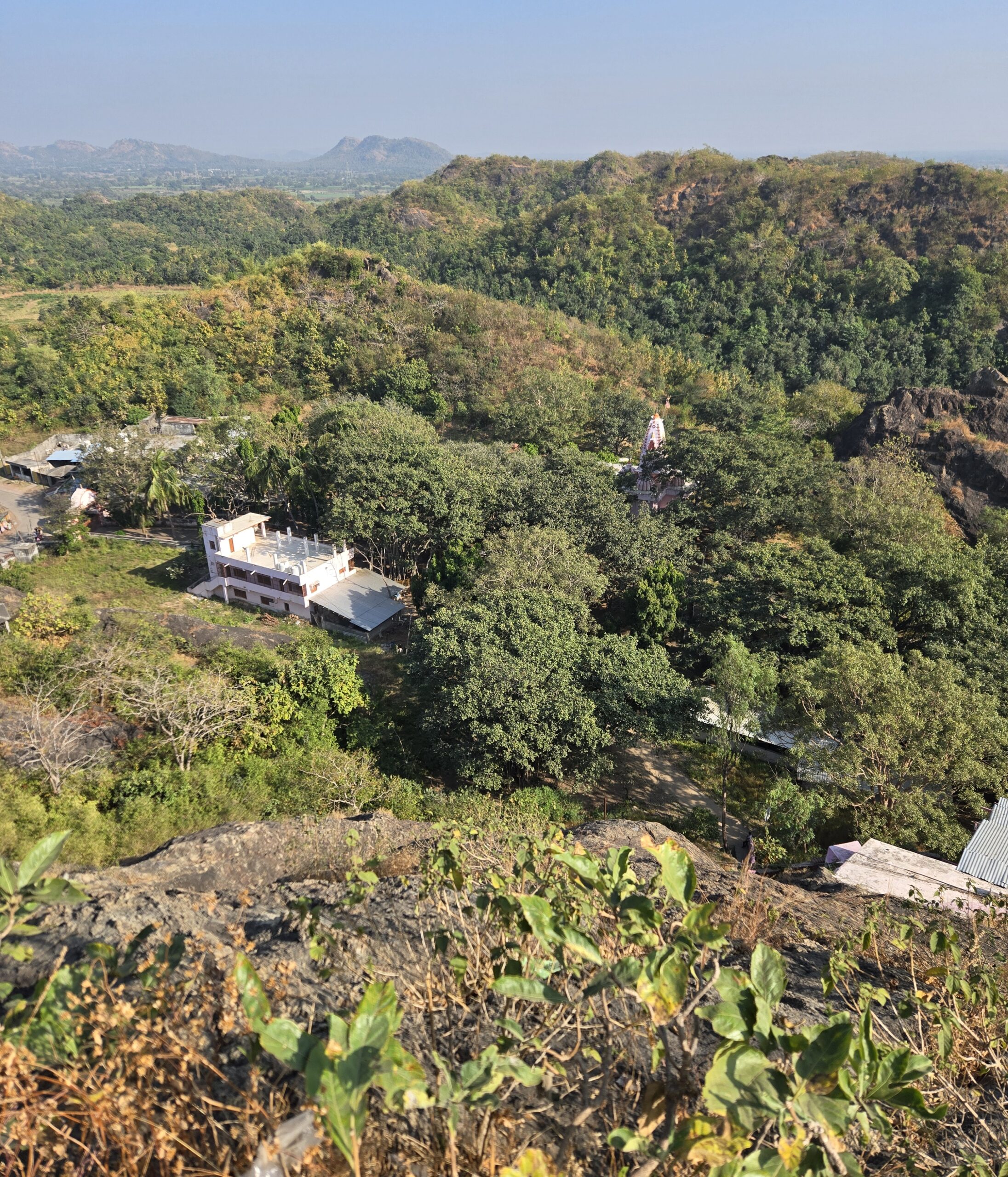
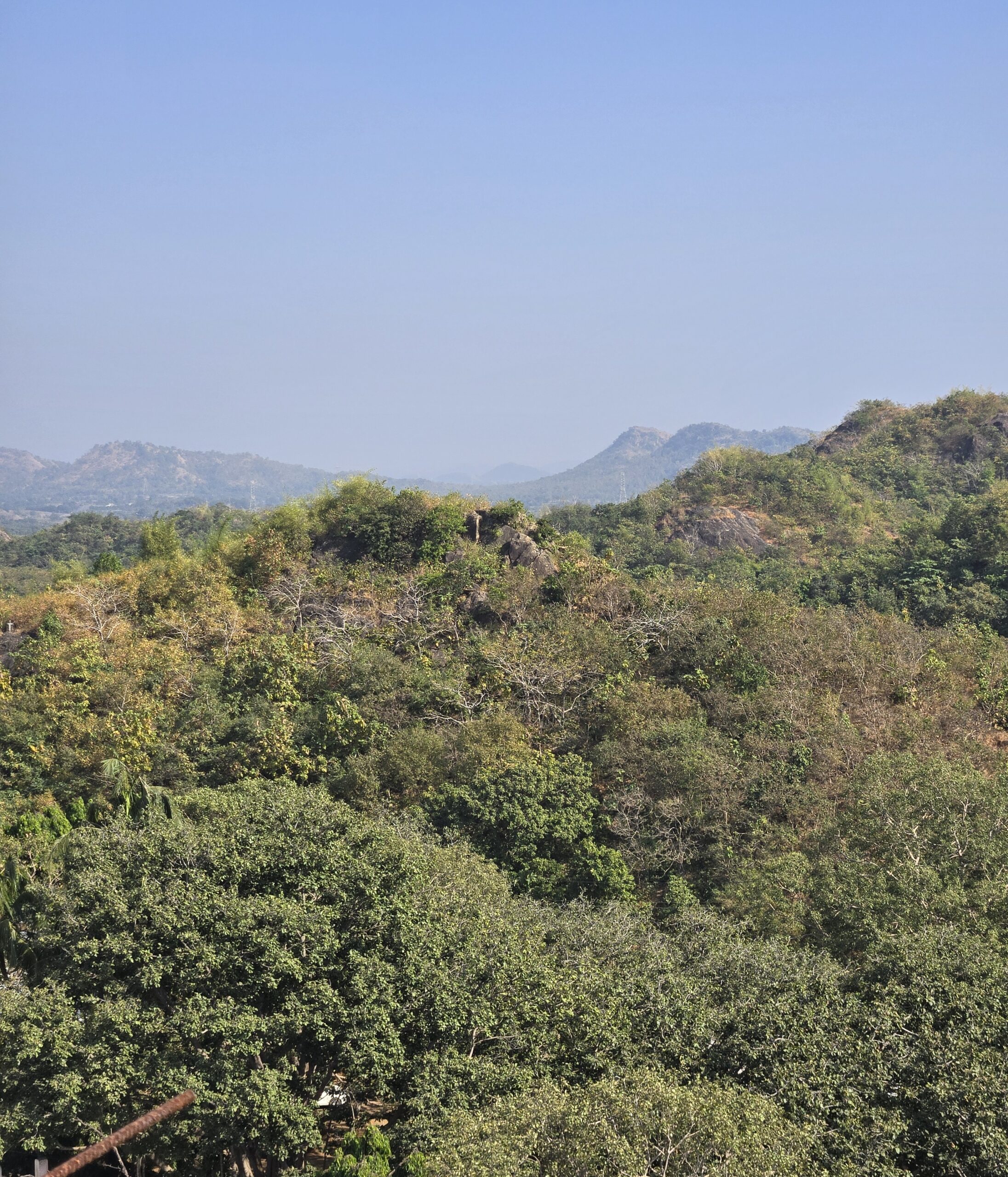
Outside the temple, the mountain opened around us again. The contrast was striking: one moment we were enclosed in incense and shadow, and the next we were looking across miles of green landscape beneath the open sky.
The ceremonial cave
After leaving the temple, the climb became shorter but rougher. The constructed staircase gave way to natural steps cut directly into the mountain. We followed them to an enormous multi-roomed cave with several openings looking out across the landscape.
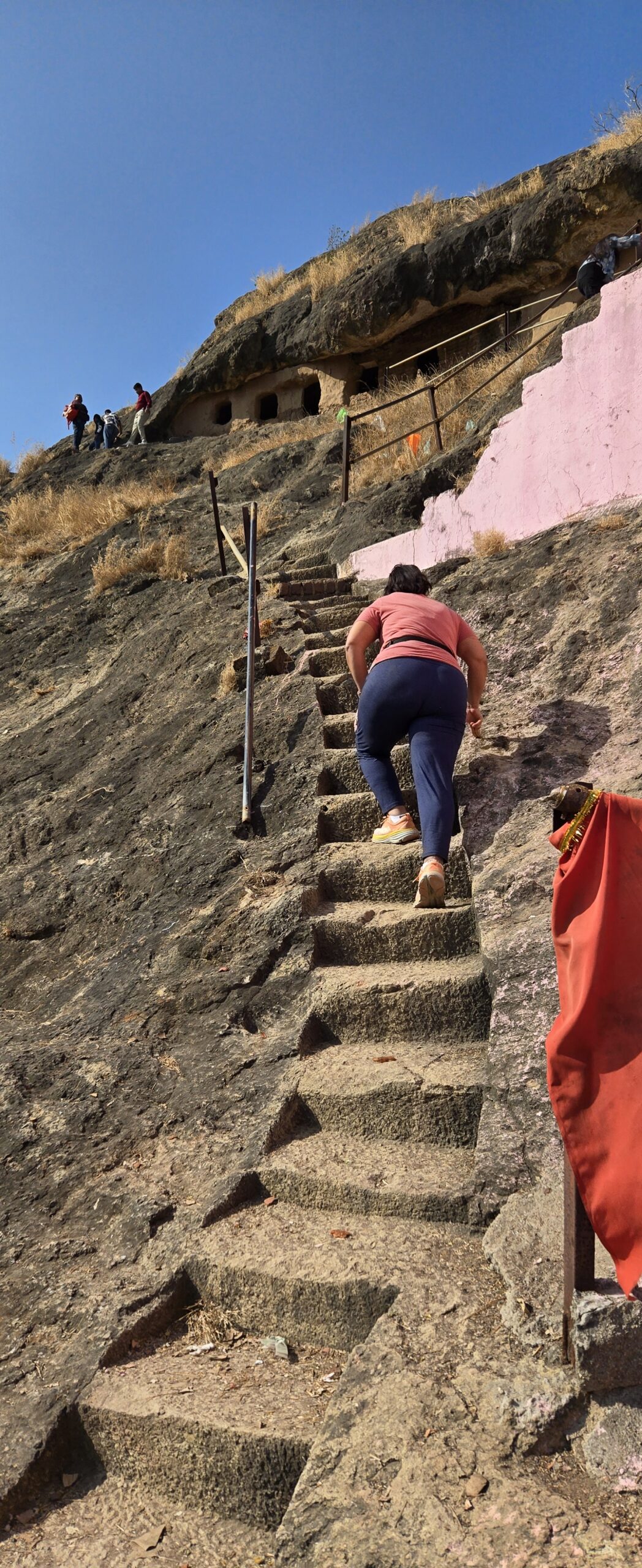
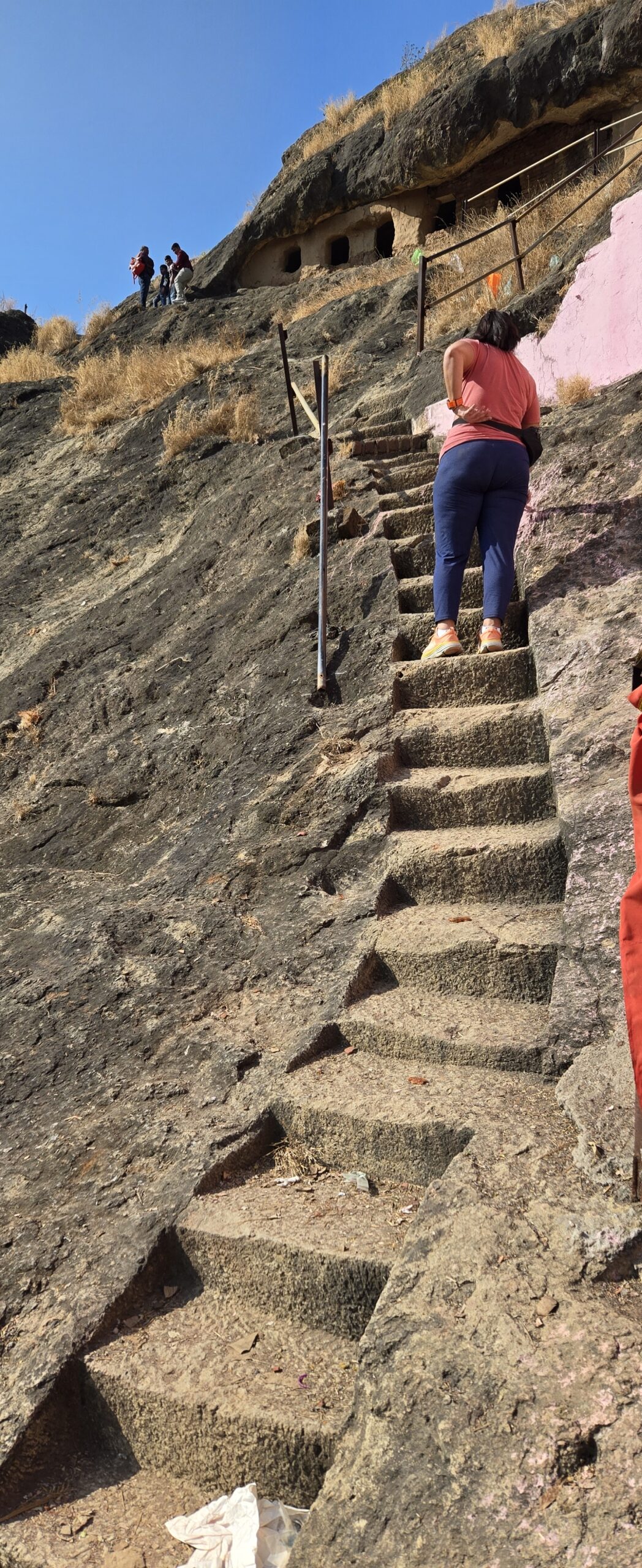
From the outside, it was difficult to understand how large the cave would feel. Inside, its sandy yellow walls formed a room spacious enough for perhaps ten people to sit comfortably. Ruby is five feet eight inches tall, and even she could stand with room above her head.
Gujarat Tourism identifies a group of seven ancient rock-cut caves at Kadia Dungar and notes that their design suggests they were once viharas. But the caves are not preserved only as distant history. They also remain part of the memories and traditions of families who continued visiting them.
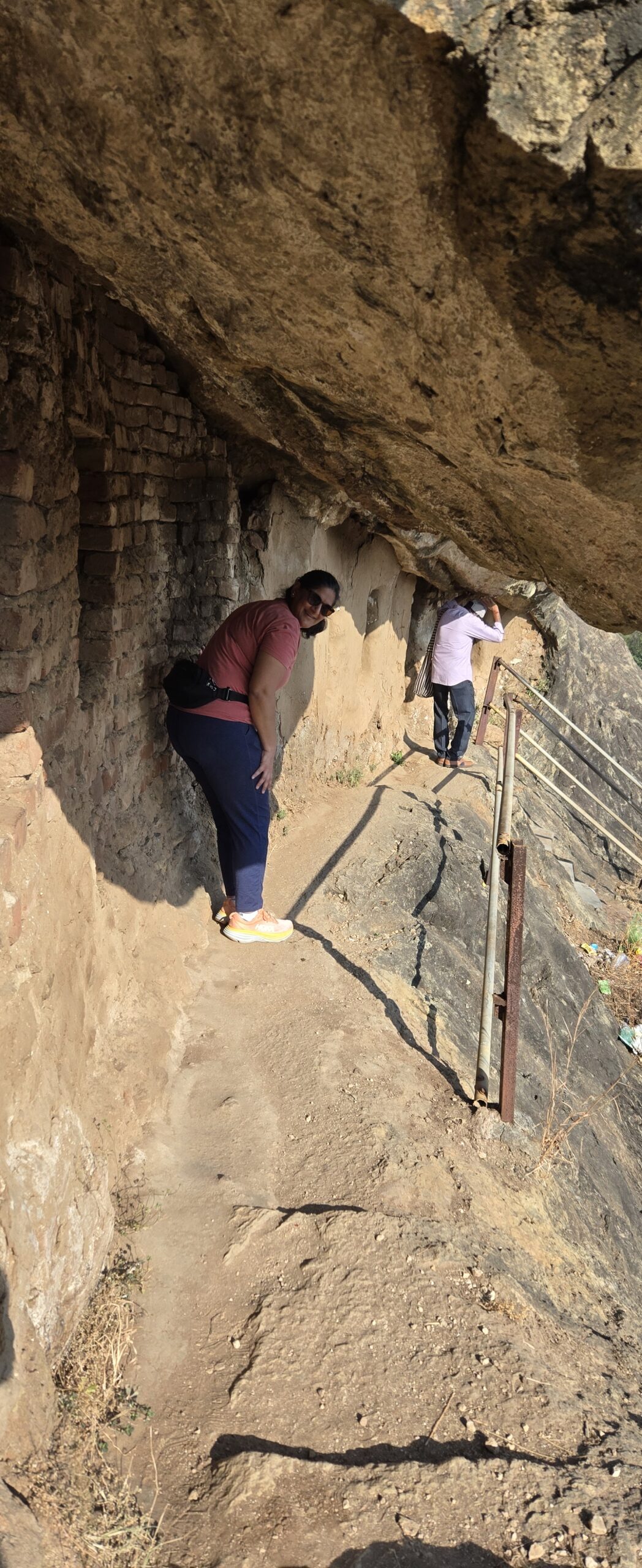
Kishore maasaa shared that when he was a boy, he would come here with his father, mother and brother. They did not merely stop for an afternoon. His family would stay inside this cave for several days at a time.
That story changed the space for us. It was no longer simply an ancient chamber we had come to photograph. It was a room from his childhood—a place where his family had slept, talked and passed entire days together inside the mountain.
A quiet detour
Near the entrance to the ceremonial cave, the stone path divided. One branch continued climbing toward the summit. The other descended along an alternate route to a meditation cave below.
We followed Kishore maasaa down.
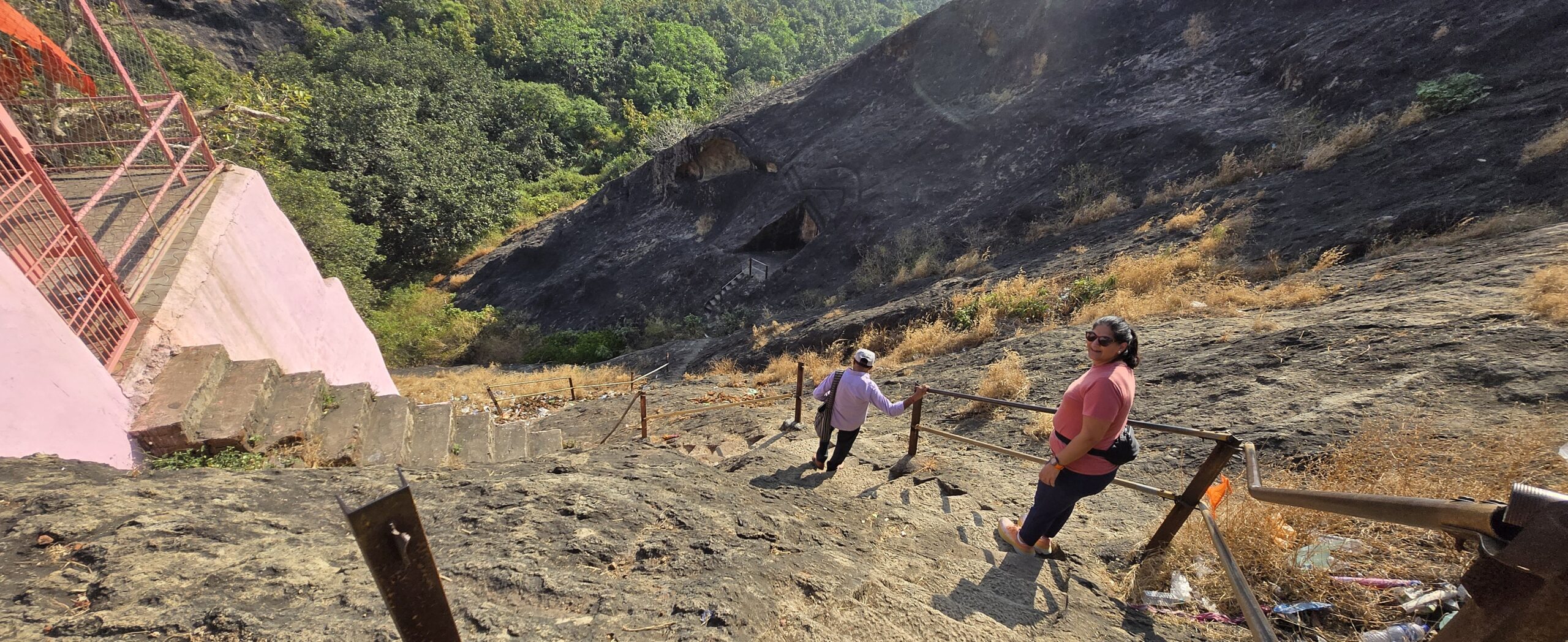
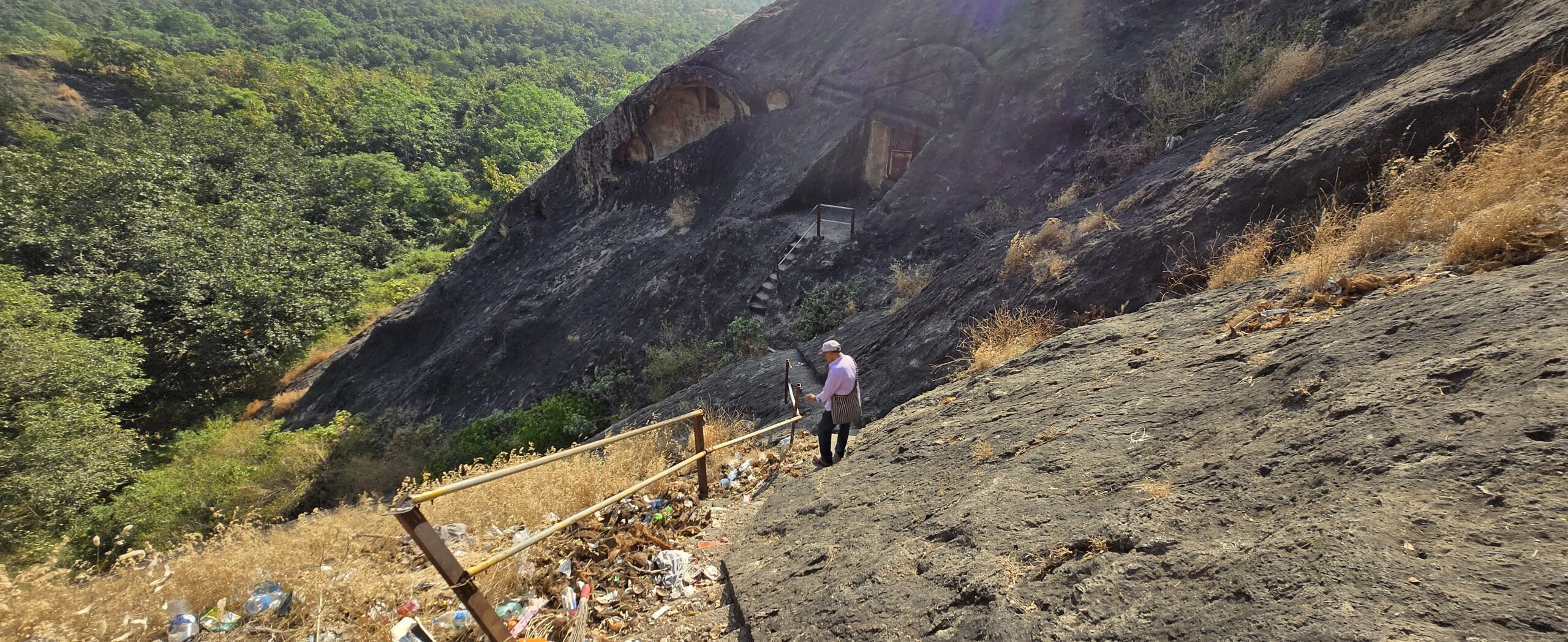
Set into the darker rock below was the first of two meditation rooms we encountered on the mountain. After visiting Meditation Room 1, we retraced our steps, climbed back to the fork beside the ceremonial cave and rejoined the upward path.
A second meditation room farther up
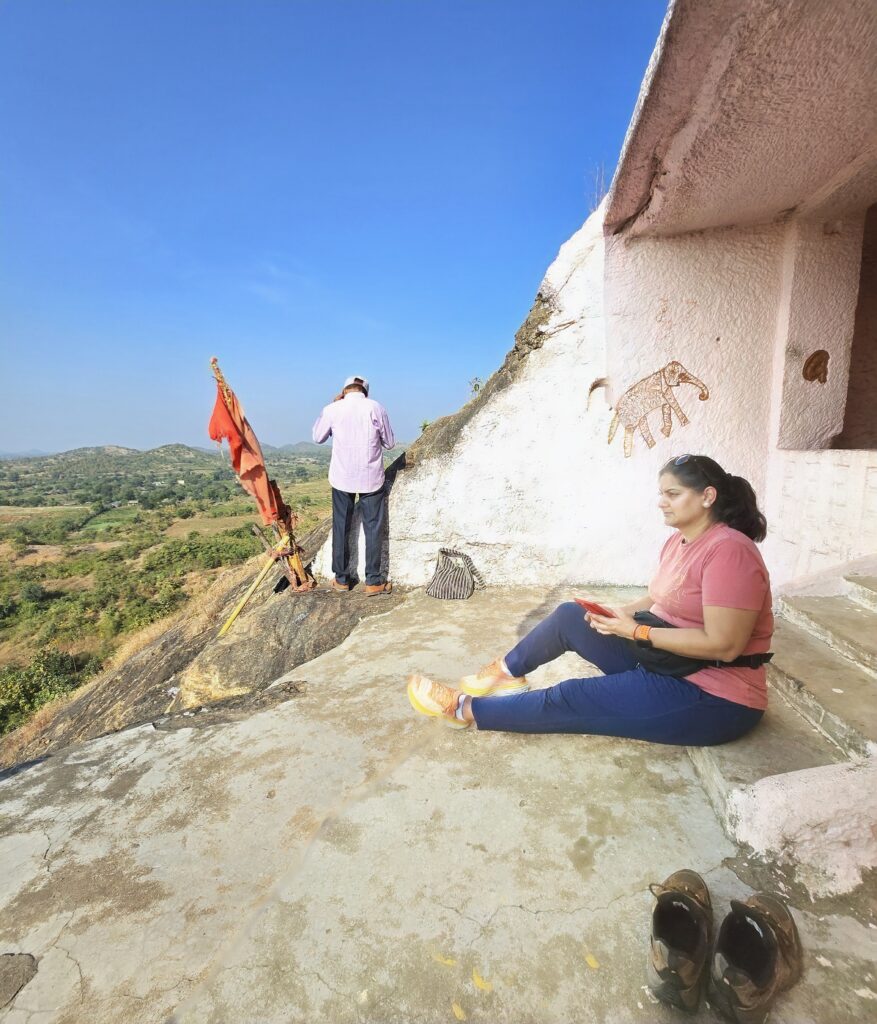
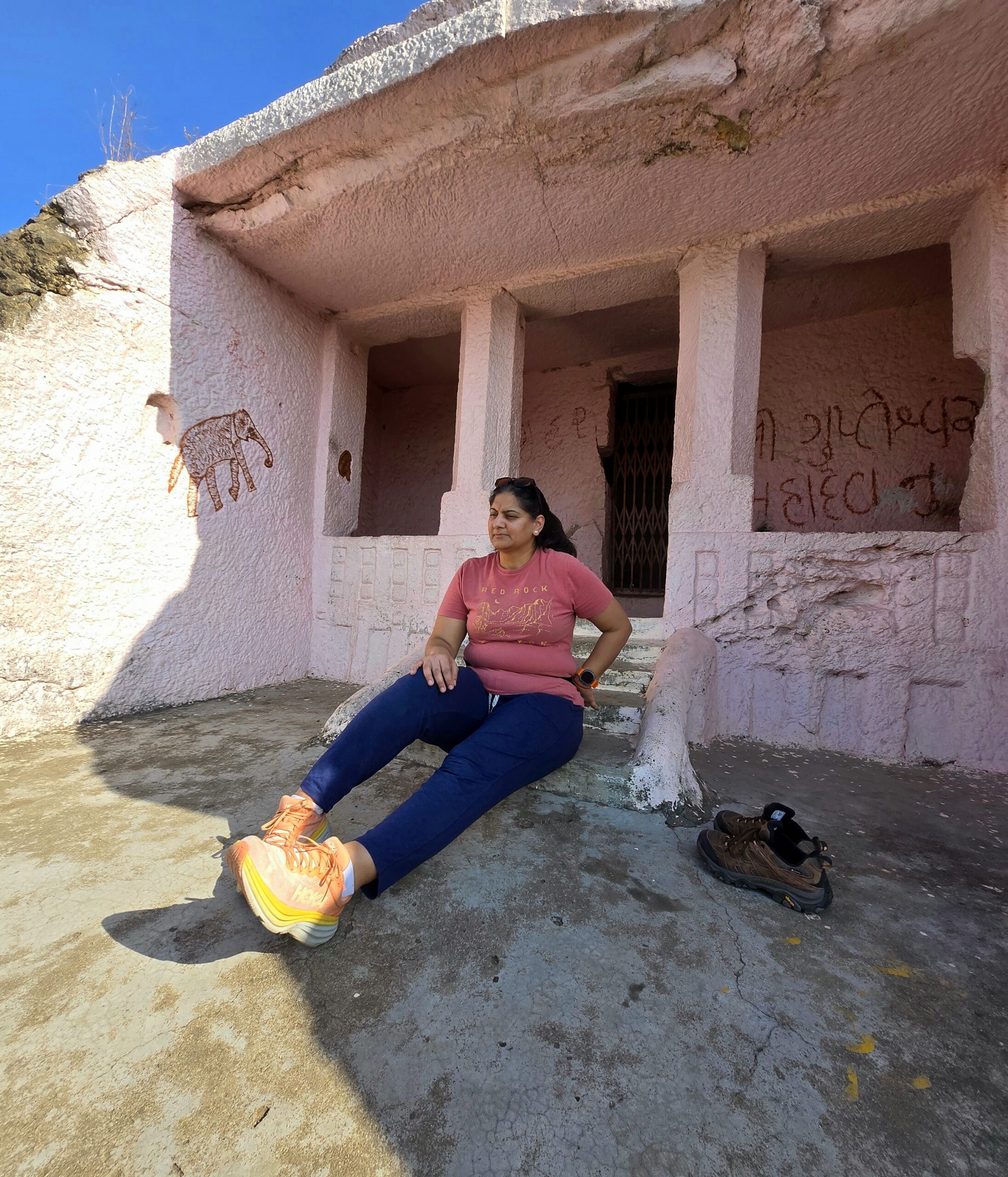
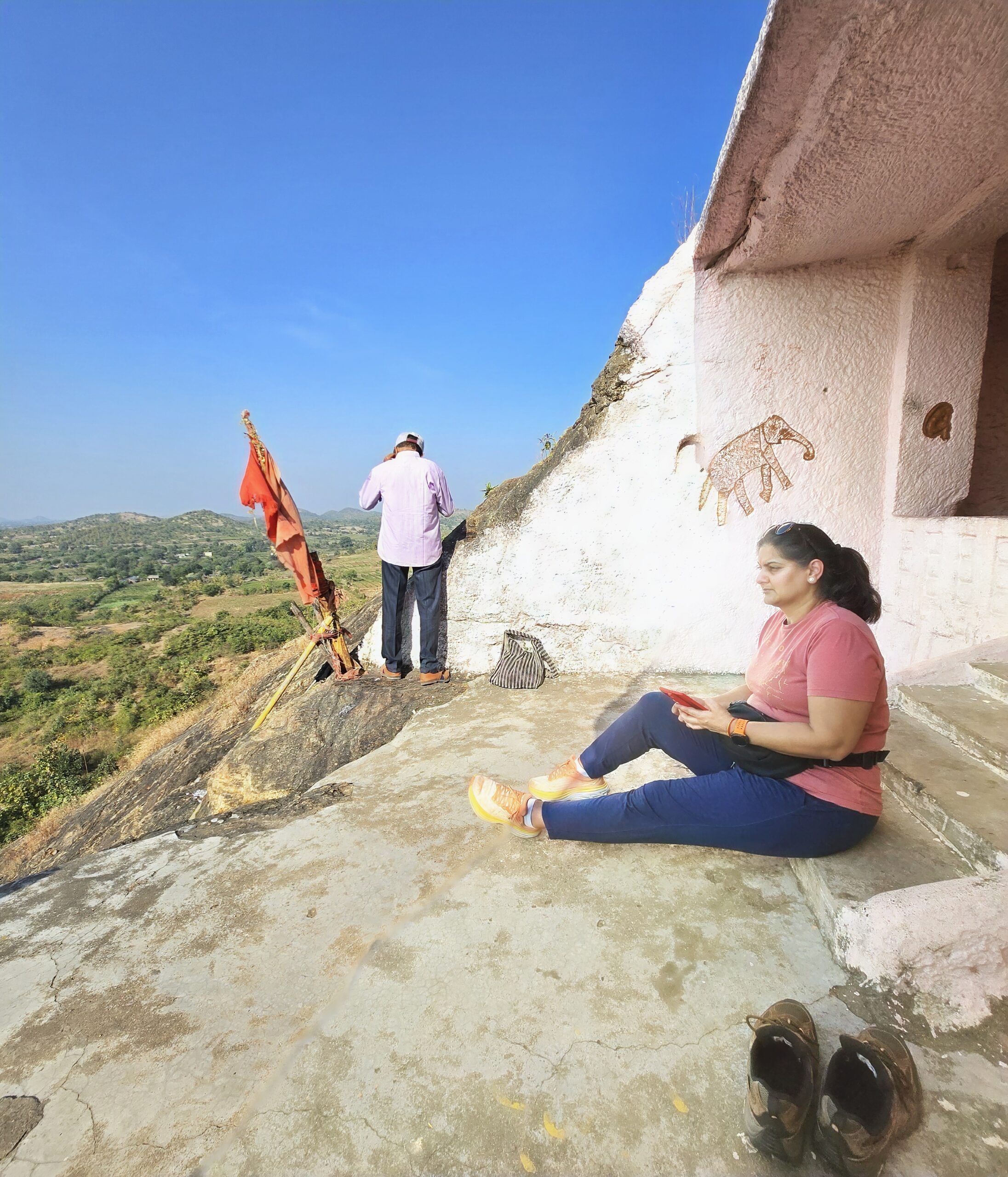
Before reaching the rainwater basin, we came across another well-formed cave farther up the mountain. Meditation Room 2 had been painted pink and shaped into a more formal façade, with several openings looking out over the landscape. Inside, a Shiva linga stood at its center.
Ruby and I sat facing the Shiva linga for some time and meditated in complete silence.
Afterward, Ruby sat on the step outside the entrance and looked across the horizon. I moved toward the edge of the mountain and sat there quietly too, feeling the warmth of the sun against my skin and the coolness of a gentle mountain breeze moving past me.
There was nothing dramatic to do and nowhere else we needed to be. For a little while, the entire experience became still.
Water held by the mountain
Continuing above Meditation Room 2, we encountered a natural basin formed in the rock, positioned to collect rainwater.
Kishore maasaa told us that the basin had supplied water during the family visits of his childhood. According to local tradition, it was also used by the five Pandava brothers whose story is told in the Mahabharat.
Like many ancient places in India, Kadia Dungar seemed to hold several layers of time at once: archaeological history, Hindu worship, epic tradition and the firsthand memories of people who had returned throughout their lives.
Where Bhim and Hidimba are remembered
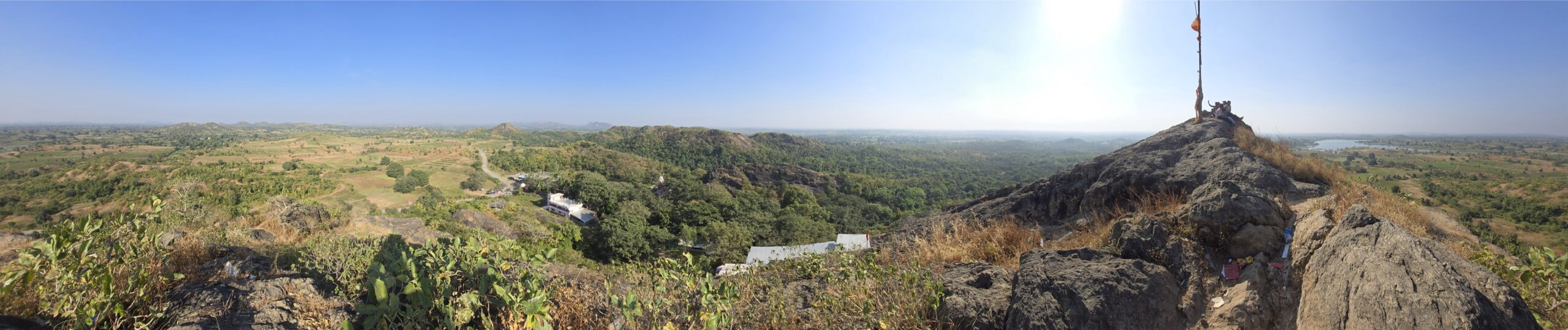
At last, we reached the top of the mountain. On the ground was a square altar resembling the kind used during a Hindu wedding ceremony.
Local tradition identifies this as the place where Bhim, one of the five Pandava brothers, married Hidimba. The jungle surrounding Kadia Dungar is also known locally as Hidimba Van.
We stood there after moving through the darkness of the temple, the vast ceremonial cave, the two meditation rooms and the story of water held naturally by the mountain. By the time we reached the summit, the view felt like only one small part of what the climb had given us.
Returning before the mountain closed for the day
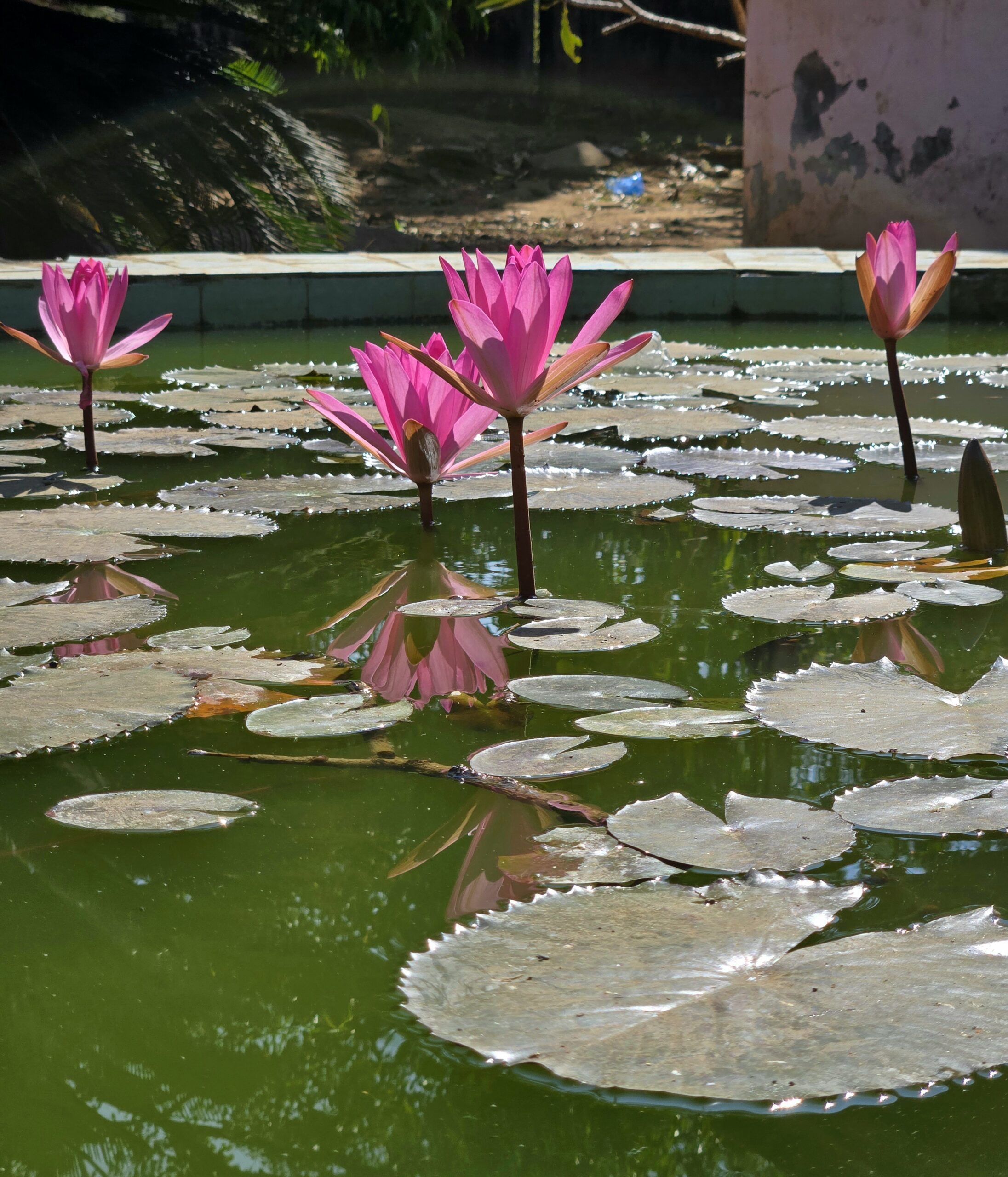
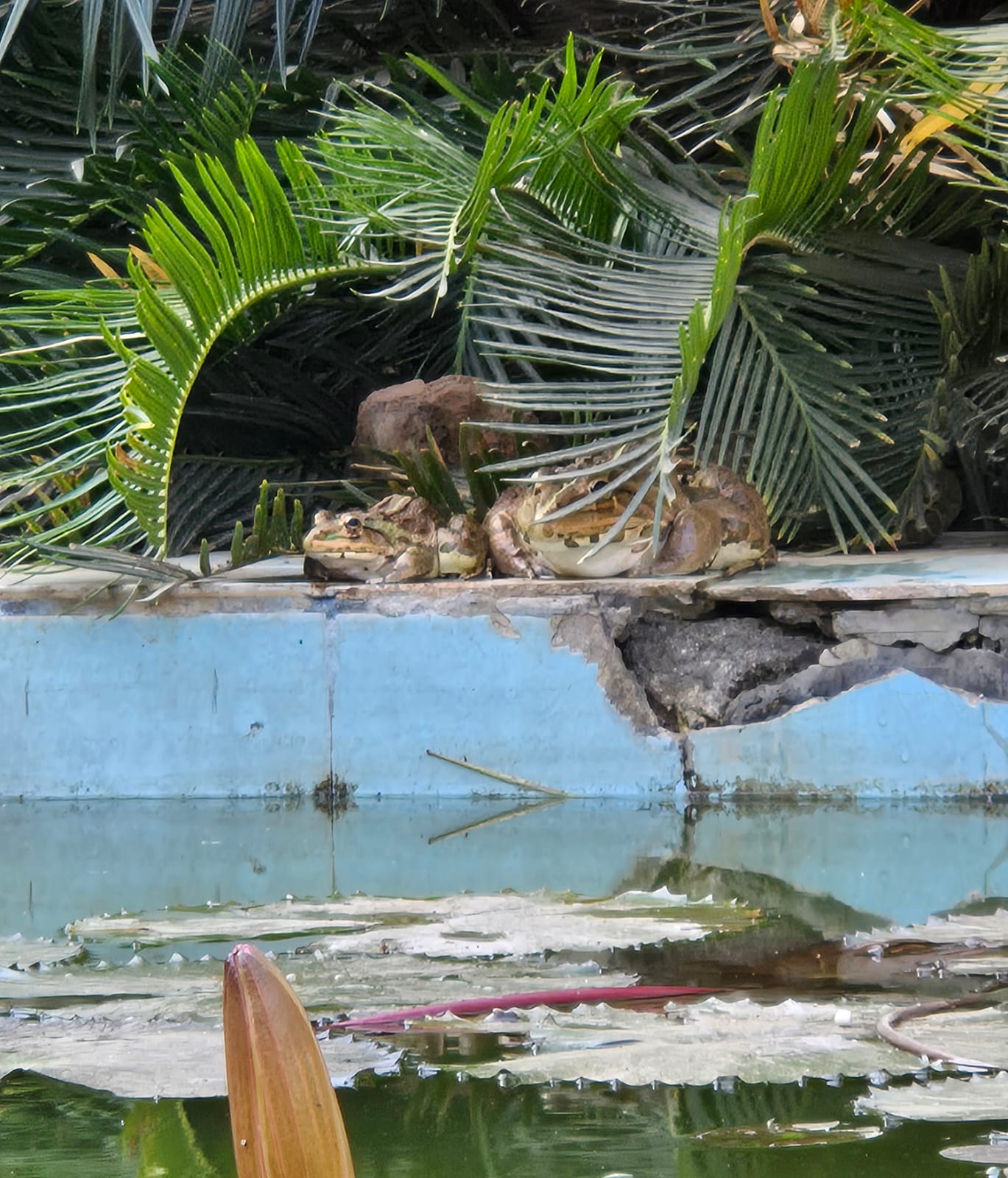
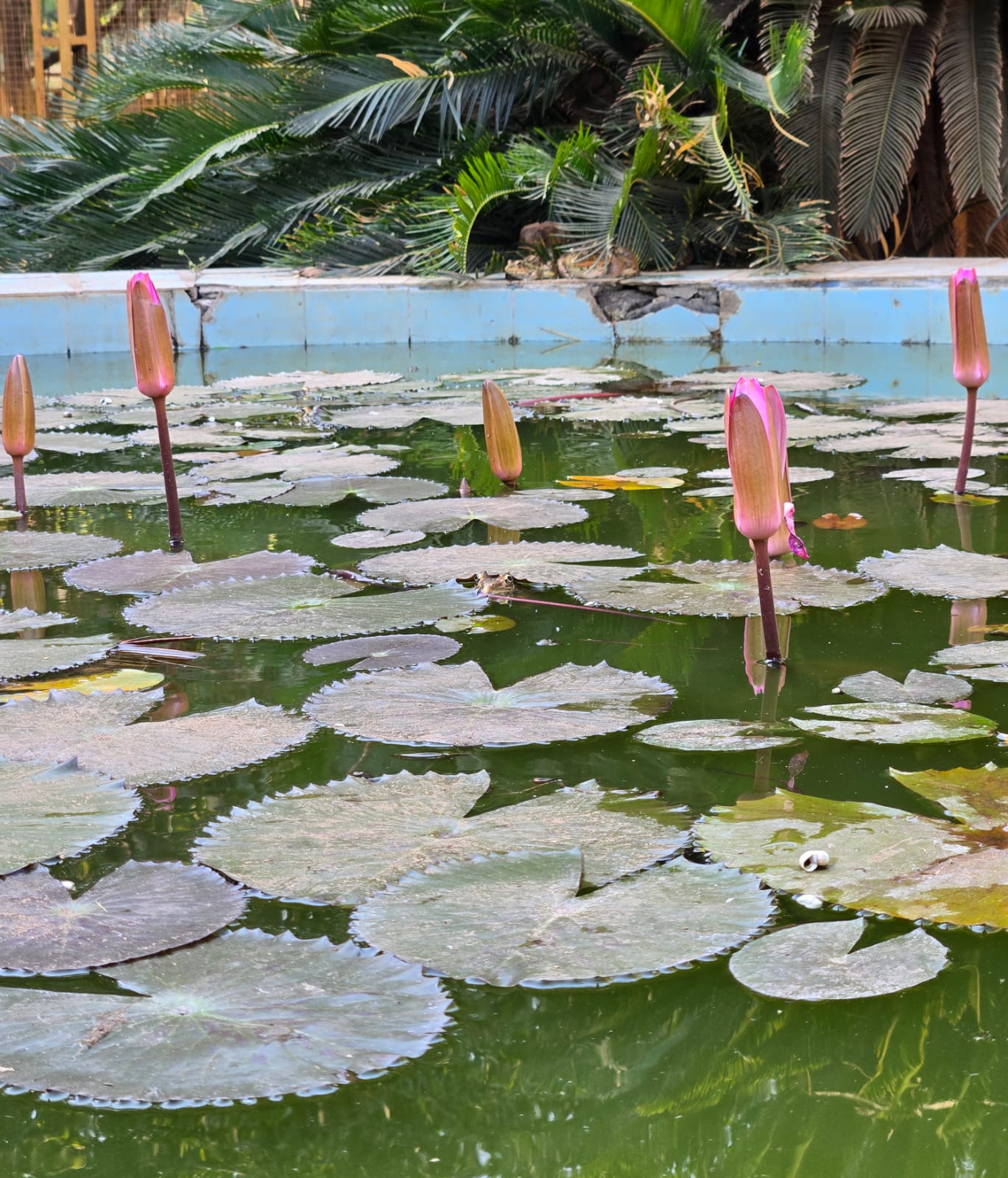
Eventually, we made our way back down toward the ashram. The lotus pond we had seen earlier looked different now. Its flowers had begun closing for the evening, almost as though the mountain itself were politely informing us that visiting hours were over.
We had arrived laughing about monkeys and Parle-G biscuits. We left carrying something much quieter: Kishore maasaa’s childhood memories, the scent of incense inside the mountain, the silence of meditation and the feeling of standing where history, faith and family stories all occupied the same rock.
Kadia Dungar was not simply a climb to the top.
It was a journey through layers.
More from India 2024
From Punjab to Gujarat.
Our journey continued through family homes, sacred spaces, busy cities and landscapes that made us slow down long enough to notice them.